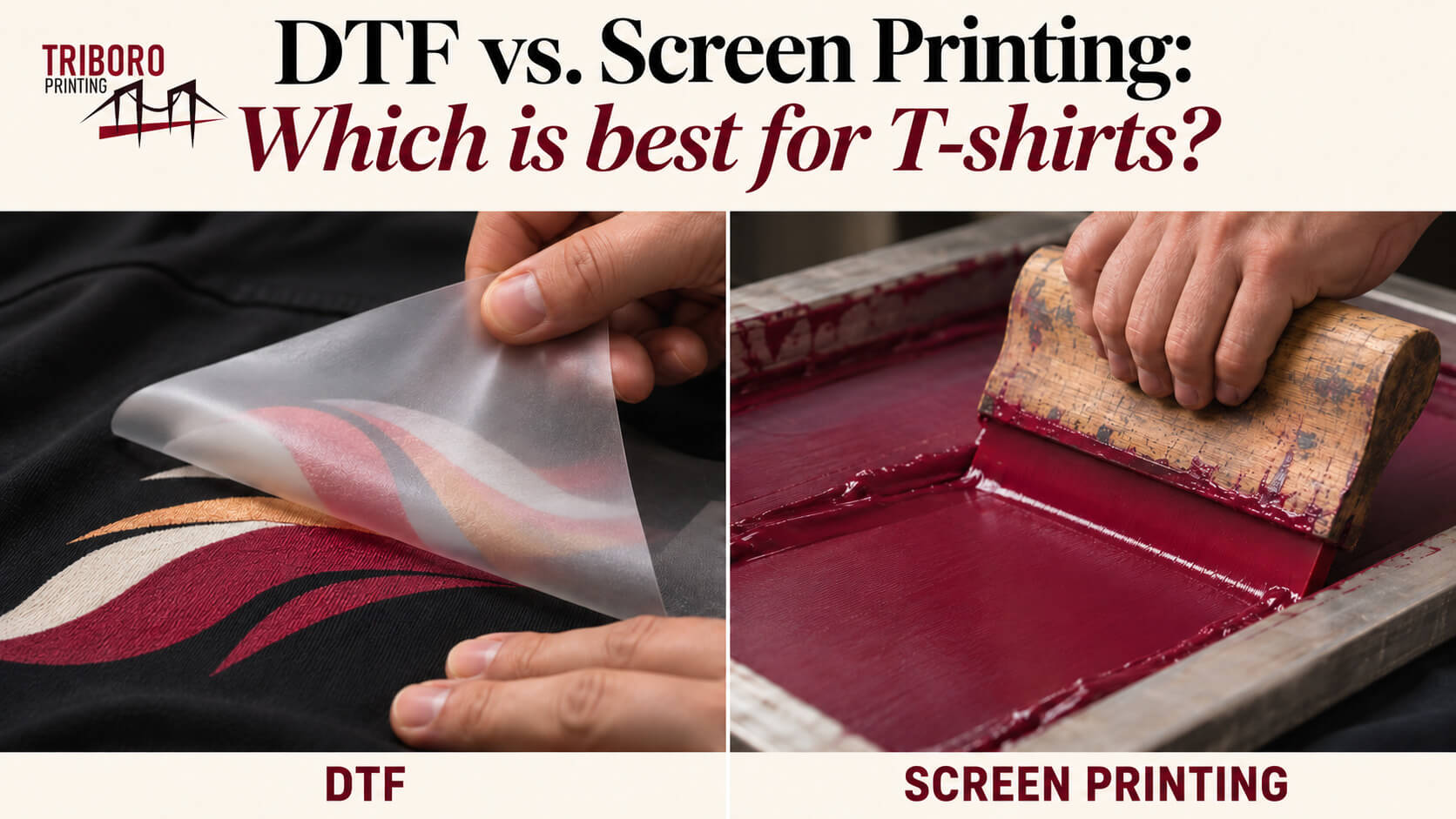
DTF vs. Screen Printing: Which is best for T-shirts?
You can’t simply compare DTF vs. screen printing without keeping the order type, quantity, and number of colors in mind. All of these parameters matter because Direct-to-film (DTF) printing is often a practical option for short runs, detailed full-colour artwork, and mixed fabric types. Screen printing is usually better suited to larger orders featuring the same design, especially when the artwork uses only a few colours. The right method depends on quantity, design, fabric, budget, and the finish you want.
For branded T-shirts, uniforms and event apparel, the choice affects setup costs, turnaround and the finished garment.
How Do DTF and Screen Printing Work?
DTF printing places a digital design onto PET film using CMYK and white inks. Adhesive powder is applied and cured, then the transfer is heat-pressed onto the garment. See Triboro’s guide to the DTF printing process for the production stages.
Screen printing pushes ink through a mesh stencil directly onto the garment. Each colour generally needs its own screen, but once setup is complete, the same design can be repeated efficiently. Read Triboro’s overview of the screen printing process for more detail.
The screenprint vs. direct-to-film decision often comes down to digital flexibility versus screen setup that pays off on repeat runs.
What Is the Difference Between DTF and Screen Printing?
The difference between screen printing and DTF is how ink reaches the garment. DTF transfers a digitally printed image from film, making photographs, gradients, and fine details easier to reproduce. Screen printing builds the image through separate colour layers, making it effective for bold graphics, solid areas and limited-colour logos. It also supports specialty inks and finishes that standard DTF transfers cannot directly match.
| Comparison | DTF printing | Screen printing |
|---|---|---|
| Setup | Digital artwork printed onto film | Screens prepared for each design colour |
| Best order type | Small runs and varied designs | Larger runs of the same design |
| Colour and detail | Full-colour artwork, gradients and fine detail | Strong spot colours and bold graphics |
| Fabric | Cotton, polyester and many blends, subject to transfer compatibility | Many textiles, with ink selected for the material |
| Feel | Transfer layer sits on the fabric | Varies by ink and print coverage |
| Production | Heat press applies each transfer | Fast repeat printing once screens are ready |
Which Method Produces Better Print Quality?
DTF suits artwork with multiple colours, photographs, small details, and gradients. It also works well for personalised names or numbers because each design can be changed digitally. Screen printing produces bold, opaque colour and consistent results for simple logos. Its feel depends on ink choice and coverage, with water-based inks generally producing a softer finish than heavier deposits.
For DTF vs. screen printing, choose according to the artwork. Detailed, full-colour images often suit DTF, while one- or two-colour logos often suit screen printing.
Which Printing Is More Durable?
The DTF vs. screen printing durability comparison depends on correct application. DTF relies on a suitable adhesive, proper curing, and correct heat-press settings. Poor application can cause lifting or cracking.
Screen prints also need compatible ink and proper curing to resist fading or wear. No single wash count applies to every garment because materials, inks, and production settings vary.
To get the best transfers, follow the supplier’s application instructions and test a sample garment. Follow care-label guidance and check the print after washing before approving a large order.
Is DTF Cheaper Than Screen Printing?
DTF can be cheaper for small quantities, but the answer changes as order size increases.
DTF avoids screen-preparation costs for each design, which can make it economical for one-offs, short runs, and mixed designs. Screen printing costs more to set up, but the per-shirt cost can fall as more identical garments are printed.
DTF vs screen printing pricing should be compared using more than the price per shirt. Consider screen setup, colour count, transfer costs, garment type, print size, labour and quantity. The break-even point varies by supplier, so ask for pricing based on your actual artwork and order size.
Is Screen Printing Better Than DTF?
It depends on the job. Screen printing often suits bulk orders with simple artwork and a few colours. DTF is more convenient for short runs, personalised designs, full-colour graphics, and mixed fabrics. Some businesses even use both methods for different order types.
What Should You Choose for Your Custom Apparel Order?
- Quantity: DTF suits one-offs and small batches; screen printing often becomes more cost-effective on larger repeat runs.
- Artwork: DTF handles photographs, gradients, and complex colour work. Screen printing suits bold graphics and limited colour palettes.
- Fabric: Confirm that the chosen ink or transfer is compatible with the garment, especially for polyester, blends, and performance fabrics.
- Finish: Consider whether you prefer a transfer layer or the feel of ink applied directly to the garment.
- Repeat orders: Screen printing can be efficient when the same artwork is ordered regularly. DTF makes it easier to produce varied designs without preparing new screens.
Triboro Printing produces custom T-shirts for businesses, teams, schools, events, and personal orders from its Astoria shop. Share your artwork, garment type, and quantity with the team to discuss suitable custom T-shirt printing options in NYC.
FAQs
A: Both can withstand repeated washing when applied correctly. Screen printing is known for durability, while DTF depends on transfer quality, adhesive, and heat-press settings. Test a sample and follow the supplier’s care instructions.
A: DTF is often more practical for small orders because it avoids separate screens for each colour and handles personalised designs. Screen printing can suit repeat orders of the same simple design when the quantity justifies the setup.
Post a Comment