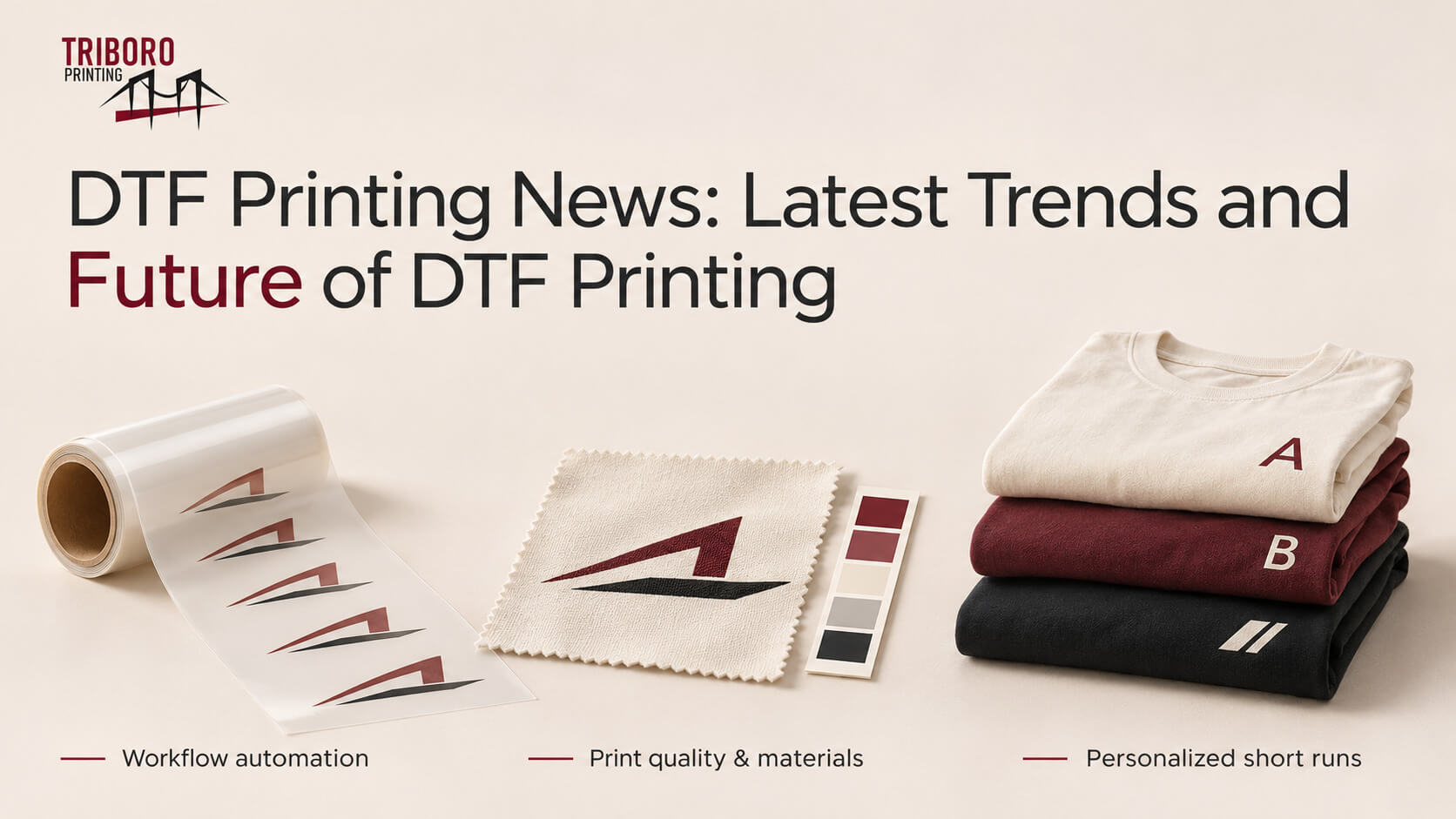
DTF Printing News: Latest Trends and Future of DTF Printing
DTF printing news in 2026 is less about a new machine every month and more about making production consistent, efficient, and commercially reliable. Direct-to-film printing has become an established option for garment decorators, while manufacturers are refining equipment, inks, films, software, and production workflows.
What Is Changing in DTF Printing in 2026?
A major theme in DTF printing news is the shift from rapid market expansion to process improvement. The DTF printing trends 2026 that businesses should pay attention to include dependable output, productivity, and the performance of complete production systems. That includes the printer, ink, film, adhesive powder, curing equipment, software, and heat press application. A well-matched workflow matters more than choosing a machine based on headline specifications alone.
Recent DTF printing news also highlights improvements in white-ink management, consumables, and equipment designed to reduce manual steps. These developments can help print shops maintain consistent results across repeat orders and reduce interruptions caused by maintenance or handling errors.
3 Developments Shaping the Industry
-
More Attention to Automation and Workflow
Automation is becoming a practical priority, making it a key topic in DTF printing news. Software features such as intelligent job nesting can arrange designs to use film more efficiently, while job tracking tools help teams monitor transfers through different production stages. Integrated powder application and curing systems can also reduce manual handling.
The right level of investment depends on order volume, staffing, available space, and the range of garments being decorated. Smaller businesses may benefit more from a dependable, easy-to-maintain setup than from equipment designed for high-volume production.
-
Better Control Over Print Quality and Materials
Developments in films, inks, and adhesive powders aim to improve consistency, transfer feel, colour reproduction, and wash performance. Specialty materials are also expanding the range of possible applications, although results still depend on selecting compatible consumables and following the correct curing and pressing settings.
This progress is closely connected to the wider evolution of digital textile printing. As DTF printing news continues to cover material and equipment improvements, print providers need to evaluate the complete process, including how a transfer behaves on different fabrics, rather than judging a sample only by its appearance straight off the press.
-
Personalisation and Shorter Production Runs
Demand for customised products continues to support on-demand apparel printing. DTF suits small batches, individual designs, and repeat orders without preparing a separate screen for every colour. This makes it useful for clothing brands testing designs, teams ordering uniforms, and businesses creating event merchandise.
The wider move towards personalisation is also influencing custom clothing technology. Digital design tools, connected workflows, and flexible production methods are helping decorators respond to changing artwork and order requirements. However, businesses still need to calculate material use, labour, equipment costs, and rejected transfers before setting prices. These practical considerations are becoming an important part of DTF printing news for businesses assessing whether to invest in new equipment.
What Does the Future of DTF Printing Look Like?
The Future of DTF printing is likely to centre on dependable production rather than novelty alone. Expect continued work on automation, workflow software, consumable performance, and specialised finishes. DTF will also continue to sit alongside other garment decoration methods. The best choice depends on fabric, quantity, design, finish, durability requirements, and budget.
For print buyers following DTF printing news, the most useful developments will be those that improve the finished product and make production more predictable. Before placing an order, consider the fabric, artwork complexity, quantity, and care requirements. These details help determine the most suitable printing process and set realistic expectations.
Get Help With Custom T-Shirt Printing
Choosing a garment printing method starts with the artwork, fabric, quantity, and intended use. Triboro Printing provides custom T-shirt printing in NYC for businesses, teams, events, and personal orders. Visit the T-Shirt Printing in NYC page to learn more and request a quote.
FAQs
A: DTF remains an established part of garment decoration. Current industry coverage suggests the market is focusing increasingly on production efficiency, consistent quality, and better workflows rather than rapid equipment launches alone.
A: Automation and workflow optimisation are major areas of development. Improvements in job nesting, tracking, integrated production equipment, and consumables are intended to make output more consistent and reduce manual work.
Post a Comment