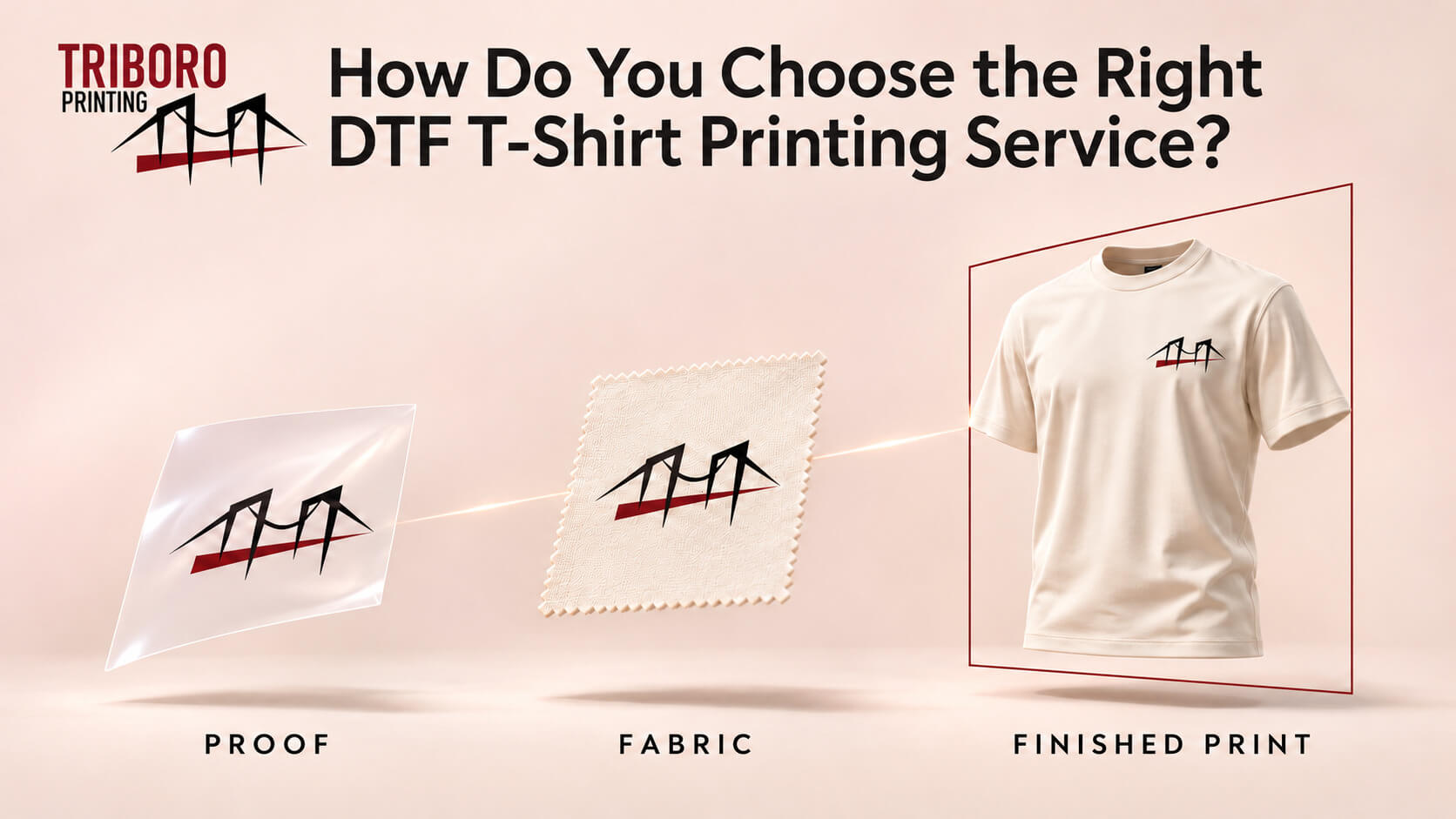
How Do You Choose the Right DTF T-Shirt Printing Service?
Finding the right DTF T-shirt printing service can mean the difference between receiving a product you are proud to wear and dealing with an order that doesn’t meet your expectations. Whether you need custom shirts for your business, branded clothing for your employees, promotional merchandise, or a new clothing collection, choosing a reliable printing partner matters.
A good provider should offer consistent print quality, suitable garment options, transparent pricing, and clear communication throughout the process. However, with so many printing businesses offering similar services, how do you know which one is right for your project? The best way to decide is to look beyond the advertised price and consider the complete customer experience, from submitting your artwork to receiving your finished T-shirts.
1. Check the Quality of the Printed Designs
Print quality should be one of your first considerations when choosing a DTF printing company. A design may look impressive on your computer screen, but the finished garment needs to reproduce the artwork clearly and consistently.
Look for clean edges, accurate colors, well-defined details, and even application across the printed area. If you are ordering shirts with a company logo, make sure small text and important design elements remain legible. If your artwork includes gradients or photographs, ask whether the printer can provide examples of comparable work.
A business offering professional DTF printing should be able to explain its process and help you understand what is achievable with your design. Reviewing actual printed garments is particularly useful because photographs alone cannot always communicate the texture and feel of a transfer.
2. Ask About Fabric and Garment Options
Not every T-shirt is made from the same material, and garment selection can affect the appearance and performance of a DTF transfer. Cotton, polyester, and blended fabrics each have different characteristics, while specialty garments may require particular transfer materials or application settings.
Before placing an order, consider the intended use of the shirts. A company ordering everyday uniforms may prioritize comfort and durability. A clothing brand may care more about fabric weight, fit, color choices, and the overall appearance of the finished product.
Ask your printing provider which garments are compatible with its DTF materials. If you have a particular fabric in mind, share its composition before production begins. This helps the printer recommend an appropriate option and identify potential issues with heat sensitivity or adhesion.
3. Compare Pricing Transparently
Price is important, especially when you are ordering for a business or working with a limited budget. However, the cheapest quote does not always represent the best value.
When comparing custom DTF printing services, check what each price includes. Does it cover the blank T-shirt, printing, artwork preparation, multiple print locations, and delivery? Are there minimum quantities, setup charges, or additional fees for special garments?
Consider this example: one provider quotes a lower price per shirt but uses a garment that does not match your requirements. Another offers a slightly higher price that includes a better-suited garment and the print placement you need. The second option may provide better value for your particular project.
For larger orders, request a written quotation with quantities, garment specifications, print dimensions, and delivery expectations clearly stated. This makes it easier to compare providers fairly and avoid surprises later.
4. Evaluate Turnaround Times
Deadlines matter when you are ordering shirts for a product launch, trade show, sporting event, or company gathering. A printing business should communicate realistic production timelines and explain what might affect delivery.
Ask whether the quoted turnaround includes artwork approval, garment sourcing, printing, quality checks, and shipping. If you need the shirts by a specific date, communicate that requirement before confirming the order.
Be cautious about choosing a provider solely because it promises exceptionally fast production. Speed is valuable, but it should not come at the expense of quality control. A reliable printer will help you understand what is possible based on your order size and the current production schedule.
5. Look for Experience With Your Type of Order
Different printing projects require different skills. Printing a simple business logo is not the same as reproducing a detailed illustration, managing dozens of personalized names, or fulfilling a large order with multiple garment sizes.
If you need bulk DTF T-shirt printing, ask whether the company has experience managing larger orders and maintaining consistent print placement, garment specifications, and output quality. If you run a clothing brand, you may want a provider familiar with detailed artwork and repeat production. If you need uniforms, consistent logo placement and dependable reordering may be more important.
A printer that understands your project can often identify potential problems before production begins. That may include artwork resolution, design dimensions, color expectations, fabric compatibility, and placement requirements.
6. Understand Print Durability and Care Instructions
A custom T-shirt should look good beyond the day it arrives. That is why it is important to understand how the printing company manages transfer application and quality control.
DTF print durability depends on the materials used, curing quality, heat-press settings, the garment, and subsequent care. A provider should be able to give practical washing and drying instructions based on its materials and the garment manufacturer’s recommendations.
If durability is particularly important for your order, ask about sample testing or request examples of comparable completed work. Avoid relying solely on broad promises that a print will last forever or withstand unlimited washing.
7. Check Customer Service and Communication
Good customer service can make the entire printing process easier. Before you place an order, notice how clearly the provider answers your questions and explains the available options.
Can you easily share your artwork? Will someone help you select a garment or understand print placement? Is the quotation clear? Does the business explain what happens if your artwork needs adjustments?
These details matter because a printing order involves more than transferring an image onto fabric. Clear communication helps prevent misunderstandings and gives both parties a shared understanding of the finished product.
For repeat business, this becomes even more valuable. A dependable printing partner can help you maintain consistency when you reorder shirts for new employees, future events, or additional product releases.
8. Prepare Your Artwork Before Requesting a Quote
You can often get a more accurate quote by providing the right information from the start.
Before contacting a custom T-shirt printing company, prepare your design file and think about the following details:
- The number of shirts you need.
- Preferred garment colors, materials, and sizes.
- The dimensions and placement of each print.
- Whether the design appears on the front, back, sleeves, or multiple locations.
- Your required delivery date.
- Any special requirements for packaging or personalization.
If you do not know the exact specifications, that is fine. A good provider should help you work through them. Sharing as much information as possible simply makes it easier to recommend suitable options and estimate the cost.
Why Choose a Professional DTF Printing Service?
Working with a knowledgeable printing provider can save time and help you avoid common production problems. You gain access to expertise in artwork preparation, transfer materials, garment compatibility, and application settings without having to manage the entire process yourself.
For a small business, outsourcing custom printing can also let you focus on marketing, product development, and serving customers. For an established brand, a reliable supplier can help maintain consistency across repeated orders.
When searching for DTF printing near me, look beyond location and convenience. The most important factor is finding a business that understands your requirements and communicates honestly about what it can deliver.
Final Thoughts
Choosing the best DTF T-shirt printing service involves balancing print quality, garment suitability, pricing, turnaround time, and customer support. A provider that offers a competitive quote but cannot meet your design or material requirements may not be the right choice. Similarly, the most expensive service is not automatically the best.
Take the time to compare relevant examples, clarify the specifications, and communicate your expectations before placing your order. These steps can help you make an informed decision and achieve a result that suits your project.
If you are preparing custom apparel for your business, event, or clothing brand, DTF printing may offer the flexibility you need. The next step is to discuss your artwork, garment choices, and order quantity with a provider that can guide you through the process.
Ready to order custom DTF T-shirts? Contact our team with your design and requirements to discuss suitable garment options, pricing, and production timelines.
FAQS
A: Pricing depends on the garment, print dimensions, design complexity, quantity, labor, and delivery requirements. Request a detailed quotation based on your specific order rather than relying on a general price.
A: Review actual work samples, compare quotations, ask about garment compatibility and print durability, and evaluate how clearly the provider communicates.
Post a Comment