What Printed Materials Does Your Gallery or Event Actually Need to Succeed?
A gallery opening, product launch, corporate event, fundraiser, or exhibition often involves many moving parts. Printed materials help bring those elements together, from invitations and programmes to signage, menus, banners, and take-home pieces.
The key is not to print everything you can think of. Each item should have a clear purpose, whether it helps guests navigate the venue, presents information, reinforces the event identity, or gives attendees something to remember the occasion by.
Why Do Galleries and Events Still Need Printed Materials?
Digital invitations, event apps, QR codes, and social media can handle much of event communication. However, physical materials still have practical uses during the event itself.
A printed programme can help guests follow a schedule. Directional signs can make a large venue easier to navigate. An exhibition guide can provide context about the artwork, while a well-designed invitation or poster can establish an event’s visual identity before guests arrive.
For galleries and exhibitions, printed pieces can also become part of the visitor experience. Catalogues, artist information, exhibition guides, and other materials can provide information that visitors can revisit after leaving.
What Printed Materials Does an Art Gallery Need?
The exact requirements depend on the exhibition’s size and type. A small gallery opening may only need basic signage and information cards, while a larger exhibition may require a complete set of printed materials.
Exhibition Catalogues
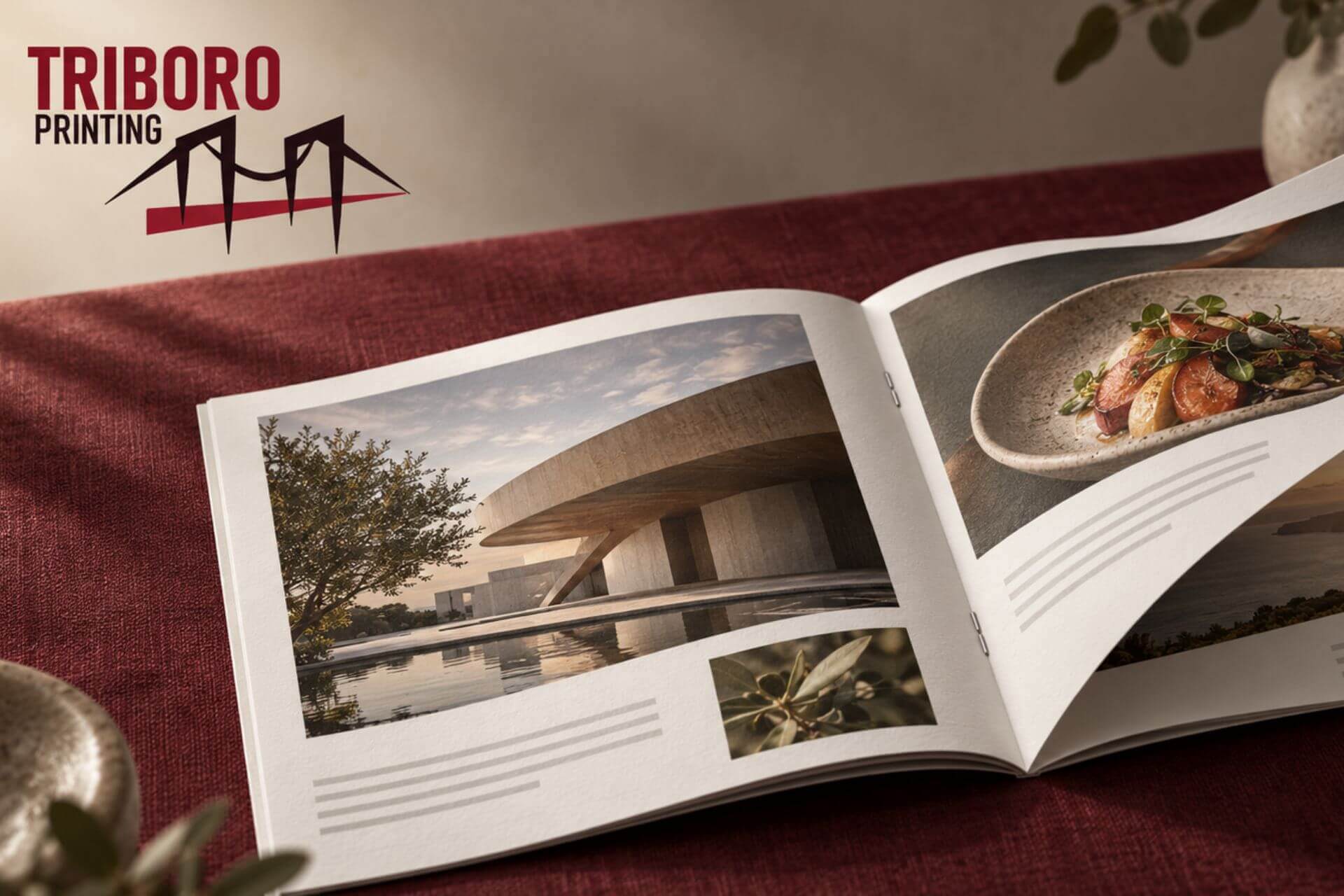
A catalogue can bring together artwork images, artist information, statements, curatorial text, and exhibition details in one printed piece.
Because artwork reproduction is often image-heavy, the choice of paper, colour process, image quality, and proofing can significantly affect the finished result. Review important artwork pages before approving a full production run.
Artist and Artwork Information Cards
Small cards can provide the title, artist, medium, date, dimensions, or other relevant information for individual works.
Keep the typography easy to read, and keep the information hierarchy consistent throughout the exhibition. Using the same format for every card can also make the gallery environment feel more organised.
Exhibition Signage
Signage can introduce the exhibition, identify different sections, provide directions, or acknowledge sponsors and partners.
Depending on the venue, signage may include:
- Exhibition title panels
- Wall graphics
- Directional signs
- Sponsor recognition panels
- Entrance signs
- Exhibition banners
- Room or section identifiers
Select materials and mounting methods based on the wall surface, installation period, and venue requirements.
What Printed Materials Do Events Commonly Need?
Events vary widely, so no single checklist applies to every occasion. A useful starting point is to group printed pieces by what they need to accomplish.
Before the Event
These materials can help promote the event and provide information before guests arrive:
- Invitations
- Save-the-date cards
- Posters
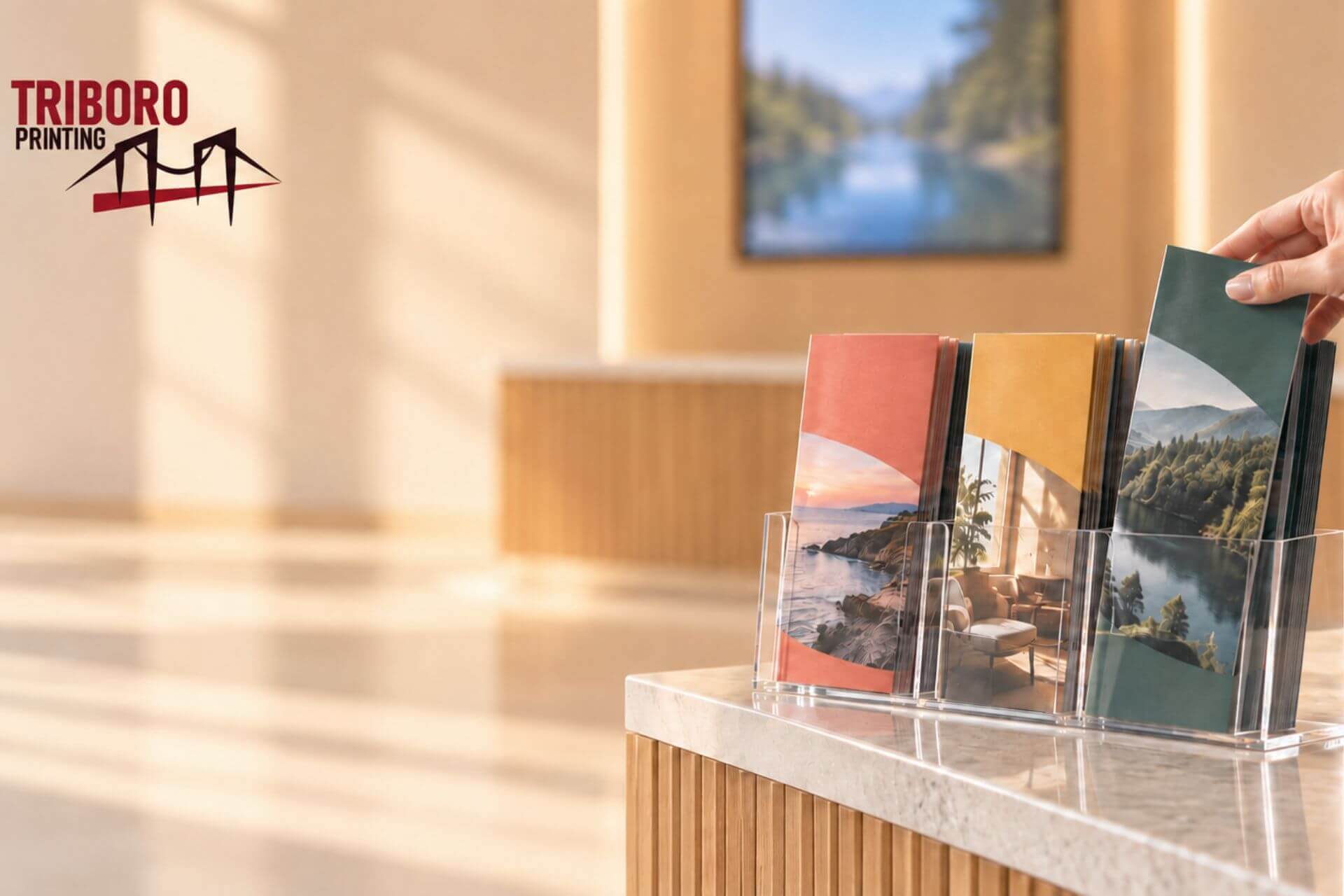
- Flyers
- Postcards
- Promotional window graphics
During the Event
These pieces help guests navigate the venue and understand what is happening:
- Event programmes
- Directional signage
- Welcome signs
- Schedule boards
- Name badges
- Table numbers
- Place cards
- Menus
- Speaker information
- Sponsor signage
After the Event
Some printed pieces can continue the relationship with attendees after the event:
- Thank-you cards
- Certificates
- Event photographs or keepsake prints
- Printed catalogues
- Promotional materials
Not every event needs all three groups. Start with the guest journey and identify where physical information will actually be useful.
How Should You Choose Materials for Gallery and Event Printing?
The right material depends on where and how you’ll use it.
For example, a programme that guests will hold needs different specifications from a large directional sign. A menu may need to withstand repeated handling, while a temporary poster may only need to remain on display for a short period.
Consider:
- How long the material will be used
- Whether guests will handle it
- Whether it will be displayed indoors or outdoors
- Whether the surface needs to be writable
- How it will be mounted
- Whether the design needs a particular finish
- How much visual detail the piece contains
Paper stock, mounted graphics, foam board, banners, and other substrates each have different characteristics, so choosing based on the application is more useful than selecting a material simply because it looks premium.
How Can You Get Better Colour Results?
Colour matters most when printed materials include artwork, photographs, logos, or established brand colours.
Check Your Colour Mode
RGB is designed for digital displays, while CMYK is commonly used for process printing. Converting between the two can change colour appearance, especially for colours outside the printable CMYK range.
Your printer’s file requirements should determine how you prepare artwork before production.
Review a Proof
A proof lets you check the layout, text, images, colours, and other details before the complete order is produced.
For colour-sensitive projects such as exhibition catalogues or branded event materials, ask the printer what type of proof is available and whether it closely represents the final production process for your needs.
Choose Paper Carefully
Paper affects both appearance and handling. Gloss, matte, silk or satin, textured, and uncoated stocks can create very different results.
Rather than choosing a stock based only on appearance, consider the event type, expected handling, the artwork, and the desired finish.
How Do You Prepare Event Artwork for Printing?
Before sending files to a printer, check the project’s required specifications.
Depending on the material, you may need to confirm:
- Final dimensions
- Bleed and safe areas
- Image resolution
- Colour mode
- Fonts
- File format
- Orientation
- Folding requirements
- Mounting or finishing requirements
Large-format graphics also need to be designed with their viewing distance and installation location in mind. Artwork intended to be viewed from several feet away may need a different approach from a programme that guests will hold in their hands.
Should You Print Everything at Once?
Not necessarily. Grouping materials into one production plan can make an event easier to manage, but different items may have different deadlines.
For example, invitations may need to be printed well before the event, while final signage may depend on information that is confirmed closer to the date.
Create a print checklist that includes:
- Item and quantity
- Final dimensions
- Material or paper
- Finishing requirements
- Artwork deadline
- Proofing deadline
- Required delivery or installation date
This helps prevent last-minute changes from affecting the rest of the project.
What Should You Ask Your Printing Company?
Before placing an order, ask:
- Which material is suitable for the intended use?
- What file specifications do you require?
- Will I receive a proof?
- How long will production take?
- Are finishing or mounting options available?
- Can you coordinate different printed pieces as one event package?
- Do you provide delivery or installation for applicable projects?
For larger exhibitions or events, discussing the complete print list with the printer early can help identify material, finishing, and scheduling requirements before production begins.
How Can Triboro Printing Help With Gallery and Event Printing?
Triboro Printing provides printing and signage services for a range of business, gallery, and event requirements. Its event-related services include banners, backdrops, gallery signage, posters, and other large-format graphics.
The company also offers broader printing services that can support events, including business printing, direct mail, promotional materials, and architectural or display-related printing.
For projects involving multiple printed pieces, working with one printing provider can make it easier to coordinate artwork, materials, finishing, and production requirements.
Conclusion
The right printed materials should support the way guests experience your gallery or event. Invitations can introduce the visual identity, signage can guide visitors, programmes can provide useful information, and catalogues or other keepsakes can extend the experience beyond the venue.
Instead of ordering every possible printed item, start by identifying what your guests need before, during, and after the event. Then choose the appropriate format, material, finish, and quantity for each piece.
If you need printing and signage for a gallery exhibition, corporate event, product launch, or special occasion in NYC, Triboro Printing can help you plan the appropriate printed materials for your project.