Foamboard Vs. Gatorboard: What’s Best For You And Why?
Thinking of investing in display materials but unsure whether to choose foam board or Gatorboard? While they look similar, they differ in durability, cost, and performance. The right option depends on your project, budget, and how you plan to use it.
What is Gator Board?
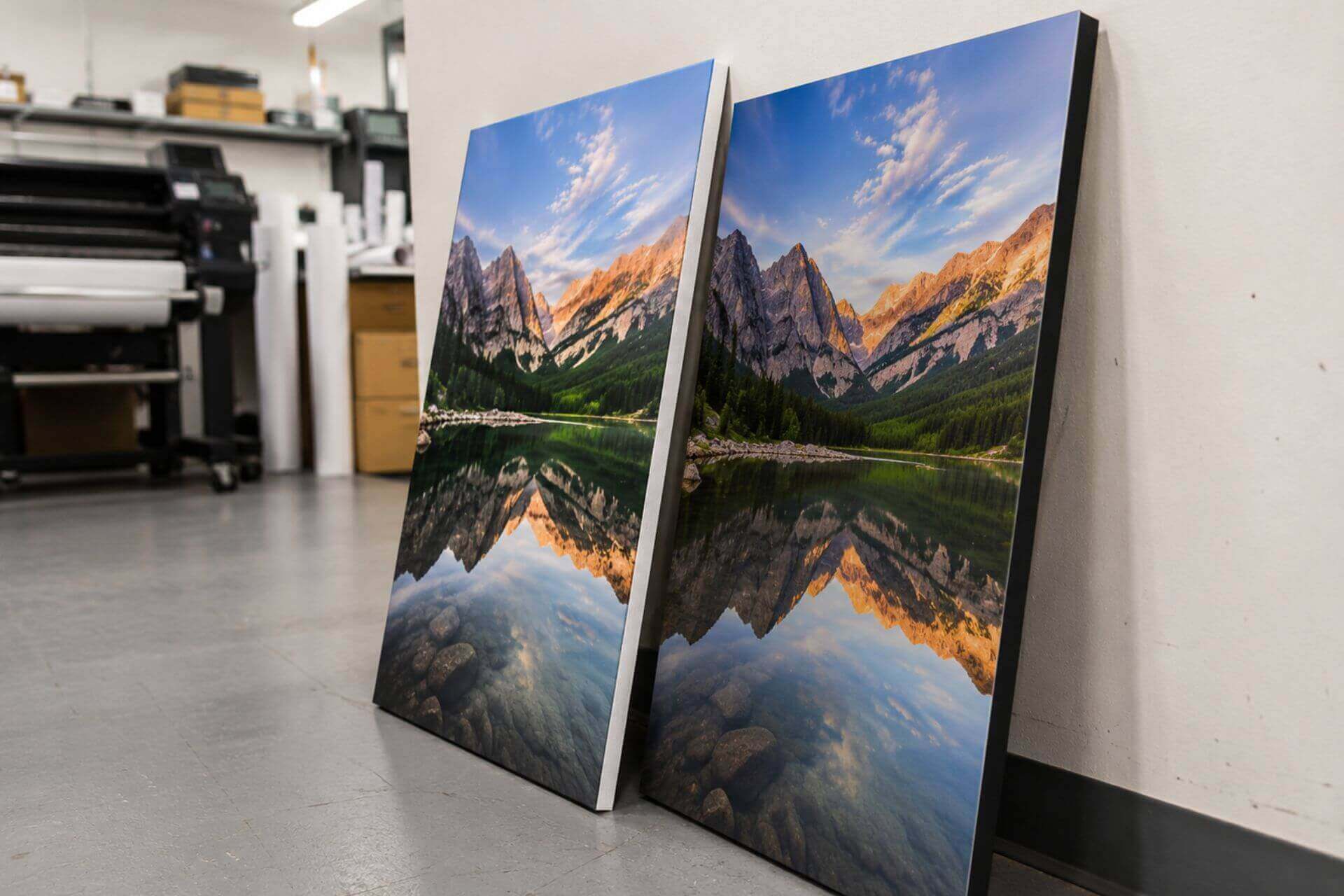
Gatorboard is a lightweight yet rigid display substrate made with a dense foam core and durable outer facings. Compared with standard foam board, its construction provides greater rigidity and resistance to everyday handling. It is available in different thicknesses and is typically used for:
- Professional signage and displays
- Art and photo mounting
- Real estate presentations and floor plans
- Trade show booths and point-of-sale displays
What Is Foam Board?
Foam board consists of a polystyrene foam core sandwiched between paper-based facings. It’s popular because it’s lightweight, affordable, and easy to work with. Common uses include:
- Student projects and school presentations
- Signs and displays
- Crafts and DIY projects
- Simple backgrounds for product photography
It does have some drawbacks, though, which we will discuss further in detail.
Gator vs Foam Board: The Direct Comparison
| Features | Gator Board | Foam Board |
|---|---|---|
| Durability | More rigid and resistant to everyday handling | More susceptible to dents and crushing |
| Water Resistance | Better moisture resistance, depending on the product and exposed edges | Limited moisture resistance |
| Weight | Lightweight but rigid | Very lightweight |
| Rigidity | Higher rigidity | Can bend or flex, particularly in larger sizes |
| Cost | Generally more expensive | Generally more budget-friendly |
| Cutting | Requires more care and a sharp blade | Relatively easy to cut with a utility knife |
| Professional Appearance | Suitable for professional displays and presentations | Suitable for basic displays and presentations |
| Longevity | Depends on use, storage, and exposure | Depends on use, storage, and handling |
| Environmental Stability | Better suited to handling than standard foam board | More vulnerable to moisture and physical damage |
| Best For | Professional, frequently handled displays | Temporary, lightweight, budget-conscious projects |
Why Is Gatorboard So Expensive?
It generally costs more because it uses a denser core and more durable outer construction than standard foam board. The exact price varies by sheet size, thickness, quantity, supplier, and printing and finishing requirements.
While foam board can be a more economical option for temporary displays, Gatorboard’s added rigidity can make it better suited for projects that require repeated handling or a more substantial presentation.
Professionals such as architects, designers, exhibitors, and businesses may choose it when durability and presentation quality are important.
Is Gatorboard Waterproof?
Many applications make this question crucial. Is it waterproof? The answer is no. Gatorboard is generally water-resistant rather than completely waterproof, and the level of resistance can vary by product.
Its outer surface can provide protection against:
- Unintentional spills and splashes
- Condensation
- Light moisture exposure
- Wet hands and normal handling
However, moisture can still reach the core through exposed or cut edges, prolonged water exposure, or damaged surfaces. Do not treat it as a completely waterproof substrate.
For applications that require a material designed for extended outdoor or wet conditions, alternatives such as corrugated plastic or certain waterproof composite substrates may be more appropriate.
What Are the Disadvantages of Foam Board?
Although this material is useful, it is important to understand its limitations. The main disadvantages of this material are as follows:
Fragile Construction
The edges can be easily damaged. Even minor impacts may cause dents, dings, or crushing. A foam board display can start to look worn if it is dropped or handled frequently.
Moisture Sensitivity
The paper facings are vulnerable to moisture, which can cause the sheet to warp, buckle, or become damaged. This makes standard foam board better suited to dry, indoor environments.
Limited Rigidity
Large foam board displays can bend or sag, particularly when they are not properly supported or when additional weight is mounted onto them. This can make it less suitable for large displays that need to remain rigid.
Limited Long-Term Durability
Foam board is generally better suited to temporary or carefully handled applications than displays that need to withstand frequent handling, moisture, or demanding environments. How long it remains in good condition depends on how and where it is used.
Material Considerations
Foam board is designed primarily as a lightweight display and mounting substrate. If you are mounting valuable artwork, photographs, or archival materials, make sure the specific board and adhesive system are appropriate for the application, rather than assuming all foam board products have the same properties.
What Is the Alternative to Gator Board?
The good news is that you have a few options if the price tag is too high or you need properties this material doesn’t provide.
Foam Board
We have talked about that a lot. It is usually cheaper but less resistant to impact and moisture. It works well for short-term, indoor, low-impact applications.
Corrugated Plastic
This is a commonly used substrate for outdoor signs and temporary displays. It is lightweight and moisture-resistant, making it useful for applications where standard foam board may not be suitable. However, its fluted construction may not provide the same rigid, premium presentation as Gatorboard.
PVC Board
PVC board is another rigid option for signs, displays, and mounted graphics. It has a smooth surface and can be more rigid than foam board, although it is heavier and may cost more.
Masonite or Hardboard
Masonite and other hardboard products are rigid and durable options for applications that require a sturdy surface. They are considerably heavier than foam-based boards, so they may not be practical when low weight is important.
MDF (Medium-Density Fiberboard)
MDF is a dense, rigid wood-fibre board used for certain display, fabrication, and signage applications. It is heavier than both foam board and Gatorboard and generally requires appropriate finishing or protection depending on how it will be used.
Final Thoughts: Gator Board vs Foam Board
Choosing between Gatorboard and foam board comes down to how you plan to use the finished display. Foam board is a practical option when low weight, easy cutting, and affordability are priorities. Consider Gatorboard when you need greater rigidity and a substrate that can handle more frequent handling.
Other options, including corrugated plastic, PVC board, hardboard, and MDF, may suit projects with specific requirements for moisture resistance, rigidity, weight, or durability.
If you’re unsure which substrate is right for your project, Triboro Printing can help you compare available options based on the size, application, printing, and finishing requirements.