
Creative Back of Business Card Designs That Stand Out
The front of a business card usually includes the essentials: your name, job title, company, phone number, email, and website. But that leaves another side with plenty of creative potential.
The back can reinforce your brand, show what you do, guide people to your online presence, or simply give the card a distinctive visual identity.
Whether you prefer a minimalist layout or something more experimental, the right back-of-card design should serve a clear purpose rather than fill space for its own sake.
Why Does the Back of a Business Card Matter?
A business card has limited space, so every design decision matters. The back gives you a chance to communicate something that doesn’t fit naturally on the front.
You could use it to:
- Highlight a key service
- Display your logo or brand pattern
- Add a QR code
- Showcase your work
- Include a short testimonial
- Share a useful tip or message
- Add a promotional offer
- Create a memorable visual
The goal isn’t to cram as much information as possible on both sides. A well-planned back can actually make the overall design feel more organised by giving the front fewer elements to handle.
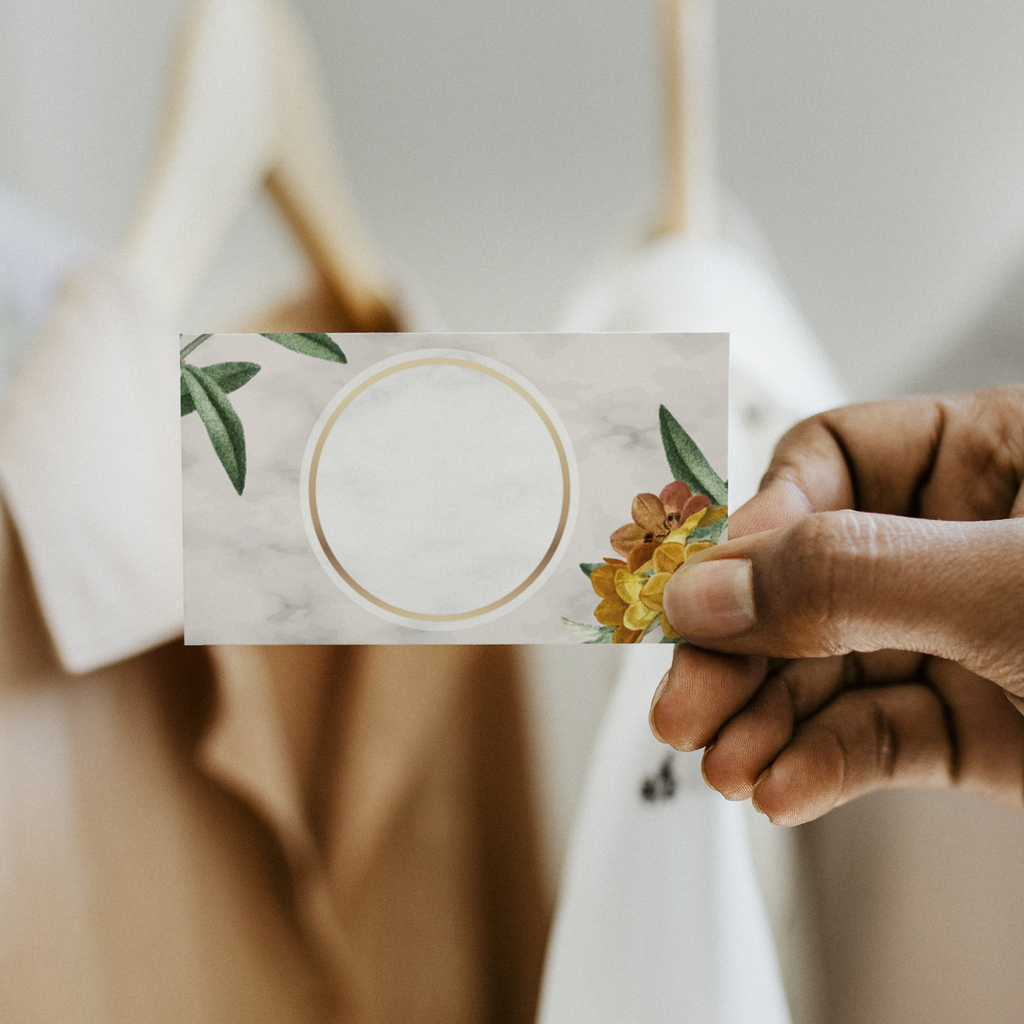
Should the Back of a Business Card Be Minimalist or Bold?
There is no single style that works for every brand. Your choice should reflect your industry, audience, and visual identity.
Minimalist Designs
A minimalist back can use plenty of white space, a small logo, a simple pattern, or a short brand message.
This approach works well when your front already includes detailed contact information and you want the second side to feel clean and balanced.
Bold Designs
A bold back can use strong colours, large typography, illustrations, photography, or distinctive patterns.
This works well for creative businesses that want the card itself to show their visual style.
The important thing is contrast and hierarchy. Even an expressive design should have a clear focal point.
Creative Ideas for the Back of a Business Card
If you’re wondering what to put on the back of a business card, consider these options.
Add a Short Tagline
A concise tagline can reinforce what your business does without repeating all the information from the front.
Keep it short enough to remain visually prominent rather than turning the back into another information-heavy panel.
Showcase Your Work
Creative professionals can turn the back into a miniature portfolio.
A photographer could feature one strong image. A designer could display a signature piece. An illustrator could use an original graphic.
Choose one strong visual rather than trying to squeeze several unrelated examples into a small space.
Use a QR Code
A QR code can connect the physical card to a digital destination such as:
- Portfolio
- Website
- Booking page
- Product catalogue
- Social media profile
- Contact form
Make sure the destination is mobile-friendly and that the code is large enough to scan easily. Test the printed version before ordering a large batch.
Add a Useful Offer
For businesses that rely on promotions or repeat visits, the back can include a discount, referral offer, appointment reminder, or other incentive.
Make the terms clear and include an expiry date where applicable.
Include a Short Testimonial
A brief customer testimonial can provide social proof without taking over the entire design.
Choose a concise statement and identify the source appropriately. Avoid long reviews that make the card hard to read.
Turn It Into a Useful Tool
A business card can sometimes do more than provide contact information.
Depending on your industry, the back could include a small calendar, measurement conversion, checklist, care instructions, map, or other reference that someone might actually keep.
The most effective idea gives the recipient a reason not to throw the card away.

Can the Back Be Used as a Mini Portfolio?
Yes. This approach can work particularly well for visually driven businesses.
A single photograph, illustration, logo treatment, product image, or design sample can communicate your style faster than a paragraph of text.
For example:
- A photographer could use a signature photograph.
- An interior designer could feature a project detail.
- A baker could show a finished cake.
- A graphic designer could display a branding project.
- A real estate professional could feature a property image.
Use an image that remains clear at the final card size. Fine details that look impressive on a computer screen may become difficult to see when reduced.
How Can You Use Finishes to Make the Design More Interesting?
The visual layout is only one part of the final result. Paper stock and finishing can also change how a business card looks and feels.
Depending on the design and available production options, you might consider:
- Matte or gloss finishes
- Foil accents
- Embossing
- Debossing
- Letterpress
- Spot UV
- Textured stocks
These techniques work best when they support the design rather than competing with it. For example, a simple logo or pattern can become a focal point when paired with a contrasting finish.
Not every effect suits every stock, so discuss the artwork and production method with your printer before finalising the design.
What Should You Avoid on the Back of a Business Card?
Creative does not have to mean complicated. Avoid adding elements that make the card harder to use.
Common problems include:
- Too much text
- Several competing fonts
- Low-resolution images
- QR codes that are too small
- Poor contrast
- Unnecessary contact information
- Cluttered layouts
- Design elements that are too close to the trim edge
Remember that the back should complement the front. Both sides should look like they belong to the same brand.
How Do You Choose the Right Back-of-Card Design?
Start by deciding what you want the second side to accomplish.
If your priority is brand recognition, a logo, colour system, pattern, or tagline may be enough.
If you want to drive online activity, a QR code with a clear call to action may make more sense.
If you’re a creative professional, a strong visual could demonstrate your work more effectively than additional text.
Once you’ve chosen the purpose, build the design around that one idea. This usually produces a more focused result than trying to use the back for everything at once.
Conclusion
The back of a business card gives you valuable space to extend your brand beyond basic contact information. You can use it for a tagline, portfolio image, QR code, promotional offer, testimonial, useful reference, or a simple visual treatment.
The best choice depends on what you want the recipient to remember or do after receiving the card. Keep the layout purposeful, keep important elements readable, and choose finishes that support the design.
If you need professional business cards in NYC, Triboro Printing can help you select suitable stocks, finishes, and production options for your design.