A Quick Guide To Restaurant Menu Printing Tips & Resources
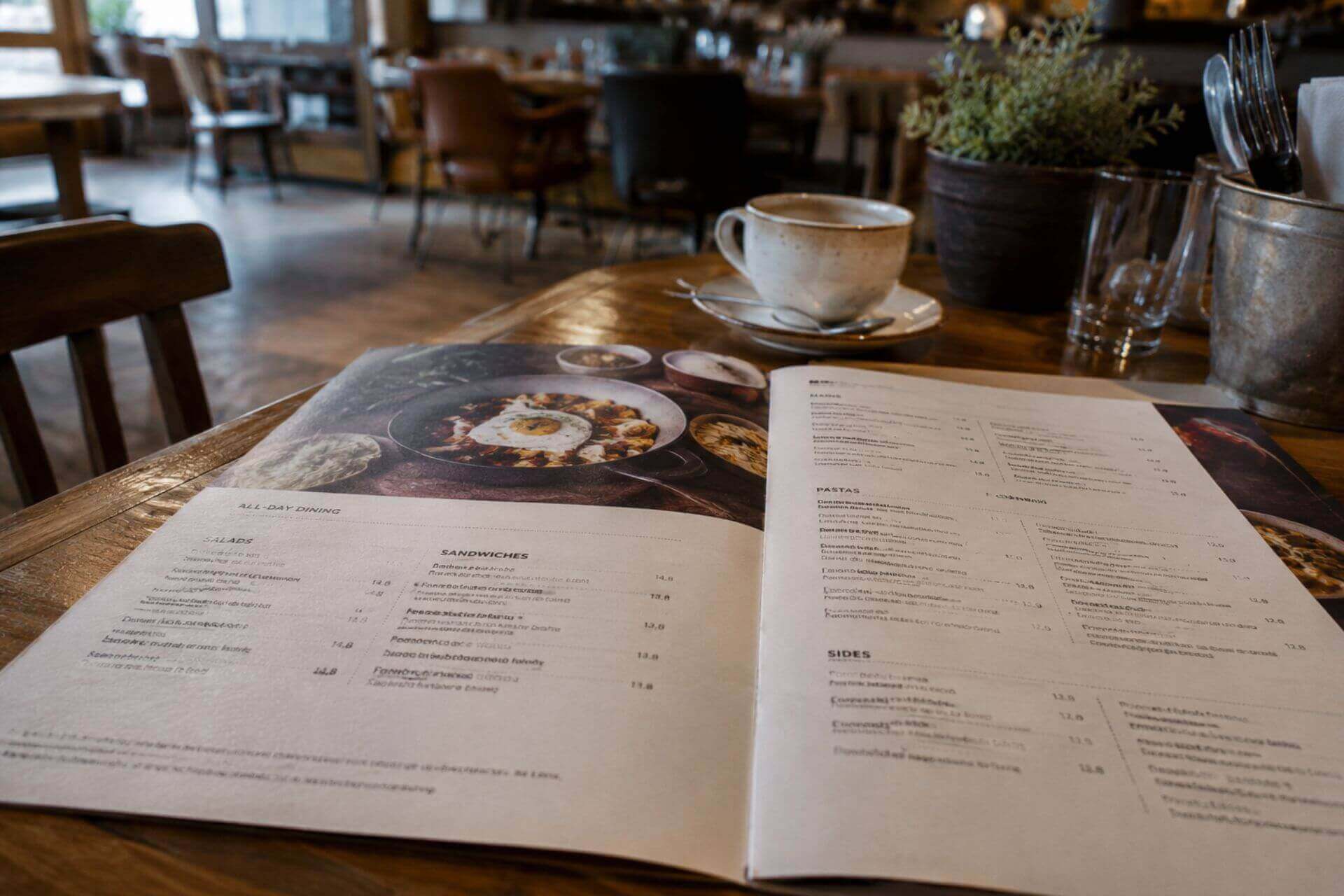
A restaurant menu does more than list dishes and prices. It helps customers navigate their options and gives them a first impression of the restaurant’s brand.
That makes the choice of format, material, finish, and printing method important. A menu used in a busy dining room needs different qualities from one designed for occasional events or takeaway orders.
Whether you’re opening a restaurant or updating an existing menu, understanding your printing options can help you choose a format that fits your operation.
Why Is Restaurant Menu Printing Important?
Customers handle menus repeatedly, place them on tables, and may encounter spills, food, grease, and frequent cleaning. A suitable printed menu should therefore be easy to read and practical for the environment in which it will be used.
Design also matters. Consistent colours, typography, photography, and branding can make the menu feel like part of the overall dining experience.
Before ordering, consider:
- How frequently the menus will be handled
- Whether they need regular cleaning
- How often prices or dishes change
- The type of restaurant
- Your preferred size and format
- Your budget and expected replacement cycle
What Restaurant Menu Printing Options Are Available?
Printing services can offer different combinations of paper stocks, finishes, sizes, and binding or folding options.
For example, a restaurant may choose a simple single-sheet menu for a limited selection or a multi-page format for a larger offering. You can also produce table tents, takeaway menus, drink lists, dessert menus, and specials separately.
When comparing providers, ask about:
- Available materials and finishes
- Custom sizes and formats
- Proofing options
- Minimum order quantities
- Artwork requirements
- Production and delivery timelines
- Whether design assistance is available
The right option depends on how the finished menus will be used, not simply on choosing the most expensive material.
Should You Choose Waterproof Menu Printing?
If menus are regularly exposed to spills or moisture, choosing a water-resistant material or protective finish can make them easier to maintain.
However, “waterproof” does not automatically mean that every printed menu can withstand unlimited exposure to water. Performance depends on the substrate, inks, coating, construction, and the finished product’s edges.
For restaurants with frequent spills or outdoor dining areas, discuss the expected conditions with your printer before selecting the material.
What Are Laminated Menus?
Lamination places a protective film over the printed surface. It can help protect menus from moisture, handling, and everyday surface wear while also changing their appearance and feel.
Common benefits include:
- Easier cleaning
- Additional surface protection
- Greater resistance to everyday handling
- A choice of matte or glossy appearance, depending on the laminate
- Potentially longer service life in busy environments
Lamination can be useful for menus that are handled frequently, but it is not automatically the right choice for every restaurant. If your menu changes regularly, replacing a laminated version may also be less convenient than updating a simpler format.
How Do You Design Custom Menus for Restaurants?
A custom menu gives you control over the layout, branding, typography, imagery, and information hierarchy.
Keep the Layout Easy to Scan
Customers should be able to find categories, dishes, descriptions, and prices without searching through a crowded layout.
Use Your Brand Consistently
Colours, fonts, logos, and imagery should work with the rest of your restaurant’s visual identity.
Highlight Important Items Carefully
Use typography, spacing, boxes, or other design elements to draw attention to signature dishes or specials. Avoid highlighting everything, as this removes the visual hierarchy.
Plan for Menu Changes
If dishes and prices change regularly, consider how easily you can update the design. You may want separate inserts or sections rather than redesigning the entire menu whenever one item changes.
Check Required Information
Make sure your final artwork includes accurate dish names, descriptions, prices, allergen information (where applicable), and any other information required for your market and business.
How to Print Restaurant Menus: A Simple Process
Step 1: Determine How Many You Need
Consider your table count, service style, replacement needs, and whether you need separate menus for different sections of the restaurant.
Step 2: Choose the Format
Decide whether you need a single sheet, folded menu, multi-page format, booklet, table tent, or another presentation.
Step 3: Select the Material and Finish
Choose a suitable stock or synthetic material based on handling, moisture exposure, appearance, and how often you’ll replace the menu.
Step 4: Prepare and Check Your Artwork
Review spelling, prices, images, colours, contact information, and layout. Make sure important text is readable at the final size.
Step 5: Approve a Proof
A proof lets you catch mistakes before the full order is produced. Pay particular attention to small text, colours, images, and pricing.
Step 6: Place the Order
Once you approve the artwork and specifications, your printer can confirm production and delivery timelines.
How Do You Choose the Right Menu Material?
| Material or finish | Suitable for |
|---|---|
| Cardstock | Standard menus and designs that need a sturdy feel |
| Specialty paper | Premium or distinctive presentation |
| Laminated stock | Menus that require additional surface protection |
| Synthetic or plastic-based materials | Applications where moisture resistance is important |
There is no single material that works for every restaurant. A fine-dining establishment may prioritise texture and presentation, while a busy casual restaurant may prioritise cleaning and everyday durability.
How Much Does Restaurant Menu Printing Cost?
The total cost depends on several factors, including:
- Number of menus
- Finished size
- Number of pages
- Paper or substrate
- Colour requirements
- Lamination or other finishing
- Folding or binding
- Artwork preparation
- Production and delivery requirements
Ordering a larger quantity can affect the per-unit price, but consider how often your menu changes before committing to a large run.
If prices or dishes change often, producing fewer menus at a time may make more sense even if the unit cost is higher.
How Can You Get Better Results From Your Menu Printing?
Start with the restaurant’s actual needs rather than choosing materials first.
Consider how often customers handle the menu, whether staff needs to clean it, how often information changes, and how you want it to feel when someone picks it up.
Always review a proof before approving a large order. If you’re unsure between materials or finishes, ask your printer for samples to compare the physical result.
Conclusion
Restaurant menu printing involves more than choosing a paper and sending a file to a printer. The format, stock, finish, artwork, and production quantity should all match how your menus will be used.
A busy restaurant may benefit from a more protective finish, while a menu that changes frequently may suit a simpler, easily updated format. The right choice balances appearance, practicality, maintenance, and cost.
If you’re looking for restaurant menu printing in NYC, Triboro Printing offers restaurant printing solutions and can help you explore suitable formats, materials, and finishing options for your menu.