Direct-to-Film Printing Pros and Cons: A Buyer’s Guide
The direct-to-film printing pros and cons come down to print quality, fabric compatibility, production costs, and the finish a design needs. DTF printing has become a popular choice for custom apparel because it reproduces detailed, colourful designs on different fabrics without requiring separate screens for each colour. However, the process also involves additional materials, heat application, and equipment maintenance.
For businesses producing custom T-shirts, hoodies and promotional apparel, understanding these factors helps determine whether DTF is the right printing method.
What Is Direct-to-Film Printing and How Does It Work?
Direct-to-Film printing is a heat-transfer method in which a design is printed onto a specialised PET film before being applied to fabric. It uses CMYK and white inks, followed by adhesive powder that bonds the design to the garment.
The process involves four steps:
- Design preparation: Artwork is prepared digitally and adjusted to the required dimensions.
- Film printing: The design is printed onto transfer film using specialised inks, including white ink for darker fabrics.
- Powder application and curing: Adhesive powder is applied to the print and heated until ready for transfer.
- Heat pressing: The transfer is placed onto the garment and pressed using a heat press at the required temperature and pressure.
Transfers can also be printed in advance and stored for later application, giving businesses more flexibility when managing orders.
What Are the Pros of DTF Printing?
The Pros of DTF Printing make this method particularly useful for businesses handling custom apparel, small orders, and designs with several colours.
1. Works on Different Fabric Types
DTF transfers can be applied to cotton, polyester, nylon, and various fabric blends, as long as the material is suitable for heat application. This gives businesses more options when producing customised clothing, including cotton T-shirts, polyester sportswear, and blended-fabric hoodies.
2. Produces Vibrant Colours and Detailed Designs
DTF supports full-colour artwork, gradients, fine lines, and intricate graphics. White ink creates an opaque base that helps colours remain visible on darker garments.
This makes the process suitable for photographic artwork, illustrations, logos, and multi-coloured designs without preparing individual screens for each colour.
3. Suitable for Small and Custom Orders
Screen printing involves setup work that can make smaller orders less economical. DTF transfers are prepared digitally, making individual garments and short production runs more practical.
For example, a business ordering 15 personalised T-shirts with different names or graphics can use individual transfers without preparing a separate screen for every design.
4. No Separate Screen Setup for Each Design
Traditional screen printing requires screens to be prepared for the design and its individual colors. That preparation can be worthwhile for large runs but may add expense and time to small, complex jobs. DTF uses digital artwork, so a business can move between different designs without creating a new set of screens for every job.
This is particularly useful when customers submit a variety of logos, illustrations, or personalized graphics. It does not eliminate all setup work. Artwork preparation, printer maintenance, film loading, powder application, curing, and heat pressing still require time and care.
5. Personalization Opportunities
Personalized products give customers a way to make apparel feel unique. Names, numbers, event details, custom illustrations, and different graphics can all be part of a DTF printing order when the artwork and workflow are suitable.
Consider a company ordering shirts for its employees. Some shirts may need different names, while a family reunion might call for a shared design with individual details. DTF can support these kinds of orders without requiring the same screen setup for every variation.
6. Opportunities for Custom Apparel Businesses
DTF printing can help a business offer more varied products without relying on one narrow type of design or customer. A printer might serve local companies, sports teams, event organizers, clothing startups, and online sellers through the same core production workflow.
The opportunity is not simply to advertise that you own a DTF printer. It is to provide reliable print quality, clear pricing, suitable garments, helpful service, and realistic turnaround times. Customers are buying the finished product and the ordering experience, not just the printing technology.
What Are the Cons of DTF Printing?
The cons of DTF printing mainly involve the garment’s surface feel, equipment requirements, material handling, and quality control.
1. Prints Can Feel Heavier on Fabric
Unlike direct-to-garment printing, where ink penetrates the fabric, DTF leaves an adhesive layer on the garment’s surface. Larger designs can feel thicker and less breathable, particularly on lightweight T-shirts.
For garments that require a softer finish, DTG may be a better option.
2. Requires Additional Equipment and Supplies
A DTF setup requires more than a printer. Businesses may need specialised transfer film, adhesive powder, curing equipment, a heat press, and compatible inks.
These supplies add to the initial investment and ongoing expenses. Powder handling, workspace cleanliness, and proper ventilation also require attention.
3. Requires Consistent Production Settings
Incorrect curing temperatures, uneven adhesive application, unsuitable film, or inconsistent heat-press pressure can cause poor adhesion and visible defects.
Operators must test materials and maintain consistent settings, particularly when working with different fabrics or suppliers.
Is DTF Printing Good Quality?
Buyers asking if DTF printing is good quality should consider both the printed design and its application. DTF can produce sharp graphics, vibrant colours, and clear text, including on dark garments.
However, the final result depends on artwork resolution, ink quality, transfer film, adhesive powder, curing conditions, and heat-press settings.
DTF transfer quality also depends on how well the transfer bonds with the fabric. A properly applied design should have consistent adhesion without lifting edges or uneven areas.
Before approving a large order, businesses should test a sample garment. Checking colour reproduction, surface feel, adhesion, and appearance after washing helps assess how the finished product will perform.
When Should a Business Choose DTF Printing?
The pros and cons of direct-to-film printing become easier to assess when considered alongside actual production requirements. DTF is worth considering for:
- Custom T-shirts and hoodies with detailed graphics.
- Small apparel orders with individual designs.
- Promotional clothing featuring colourful brand artwork.
- Polyester and blended-fabric garments.
- Businesses that prepare transfers in advance for repeat orders.
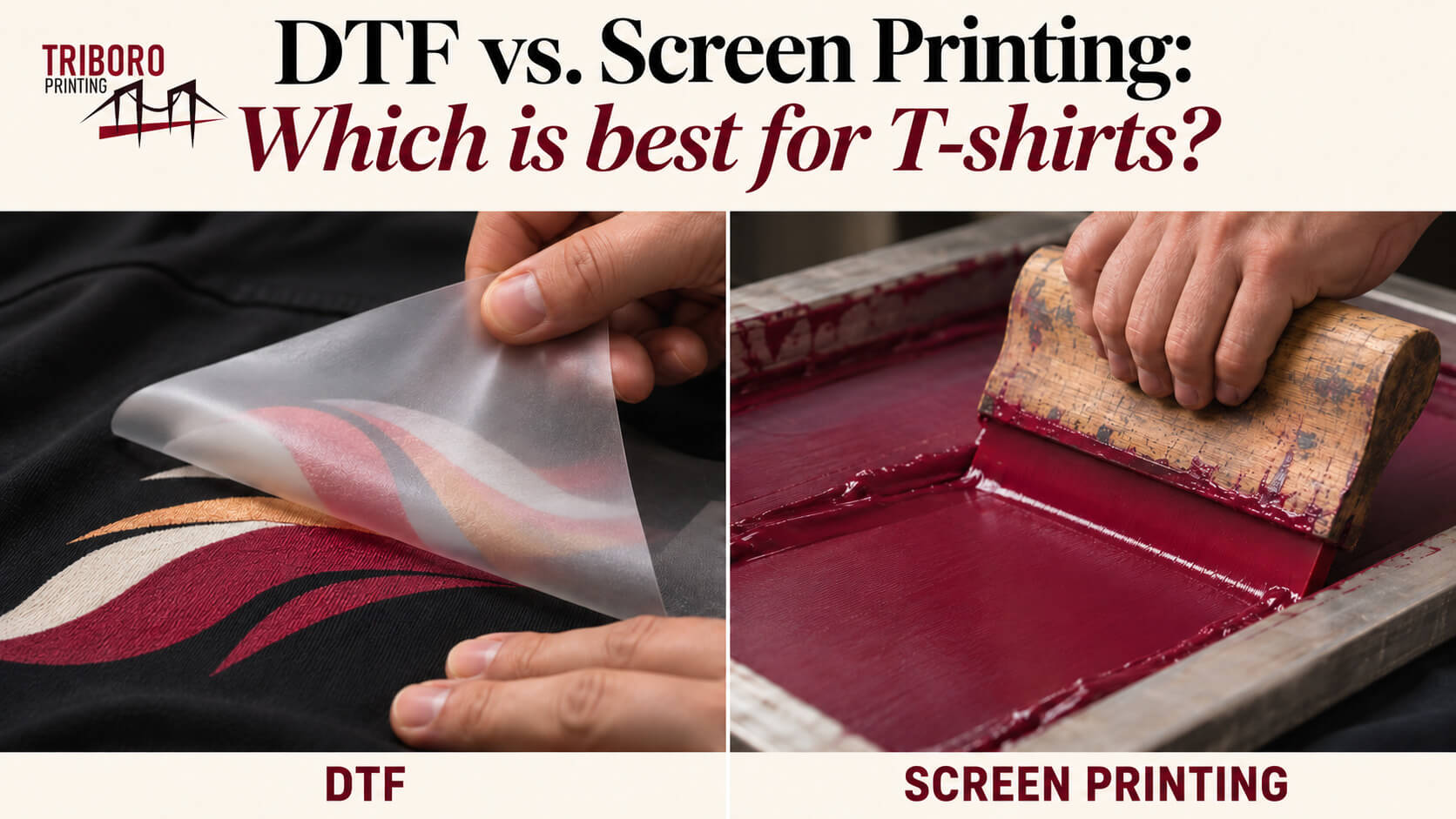
Businesses producing large quantities of identical garments should also compare DTF with screen printing. Screen printing can become more economical at higher volumes, depending on the artwork, number of colours, and setup requirements.
Planning a custom apparel or promotional printing project? Triboro Printing offers printing and design services for businesses across New York. Our team can help discuss your project requirements, artwork, and suitable production options. Contact us to discuss your next printing project.
FAQs
A: DTF printing offers vibrant colours, detailed designs, compatibility with different fabrics and flexibility for small orders. Its disadvantages include a noticeable transfer layer, additional equipment costs, regular maintenance, and the need for careful heat application.
A: A properly applied DTF transfer can withstand repeated washing. Its lifespan depends on the quality of the film, adhesive, ink, curing process, and garment care. Following the recommended washing instructions helps preserve the design and reduce premature peeling or cracking.
Post a Comment