How to Remove Screen Printing from a Shirt: Easy DIY Methods
A screen-printed design can last through repeated washing, but that also makes it difficult to remove when you no longer want it. Whether you’re repurposing an old shirt, removing an outdated logo, or trying to correct a print, the right approach depends on the garment fabric and the type of ink used.
Some DIY techniques may loosen or reduce a print, but complete removal is not always possible without leaving a mark on the fabric. Before trying any method, check the garment’s care label and test the treatment on a hidden area.
Why Remove a Screen-Printed Design?
There are several reasons you might want to remove a printed graphic from a shirt:
An old design: A shirt may still be wearable even when its graphic is no longer wanted.
A printing mistake: Removing an incorrectly placed design may let you reuse the garment.
A changed logo: Businesses may want to repurpose older uniforms or promotional apparel.
A new project: Removing an existing graphic can create a cleaner surface for another use.
However, removal is not always the best option. A cured design can bond strongly to the fabric, and aggressive treatment may damage the material before the graphic comes off.
What to Check Before Removing the Print
Identify the Fabric
Start with the garment’s fibre content. Cotton, polyester, blends, rayon, and other materials can react differently to heat, solvents, and friction.
Synthetic fabrics can be particularly sensitive to excessive heat or certain chemicals. Always check the care label before proceeding.
Consider the Ink
Screen printing can use different types of fabric ink. Some formulations become permanent after curing, while others have different removal or cleanup characteristics. For example, fabric inks can be designed to become permanent when properly heat set.
If you know which ink was used, check the manufacturer’s guidance before choosing a removal product.
Test First
Apply your chosen method to a small, hidden section of the garment first. Look for:
- Colour loss
- Fabric weakening
- Discolouration
- Texture changes
- Residue or staining
If the test area changes significantly, stop before treating the main design.
Can You Remove Screen Printing at Home?
Sometimes, but results vary.
A worn or partially peeling graphic may be easier to remove than a fully cured design. The goal of a DIY approach should be to loosen the graphic gradually, not to aggressively scrape, scrub, or heat the garment.
Method 1: Use a Suitable Ink or Adhesive Remover
A purpose-made product designed for textile printing may be more appropriate than household chemicals. However, the remover must be compatible with both the ink and the garment.
Before using one:
- Read the product instructions completely.
- Check whether it suits the fabric.
- Test it on an inconspicuous area.
- Work in a well-ventilated space and follow the product’s safety instructions.
- Apply only as directed.
- Gently lift loosened residue rather than aggressively scraping the fabric.
- Wash the garment according to its care instructions once the treatment is complete.
There is no single remover that works on every combination of ink and fabric.
Method 2: Try Gentle Mechanical Removal
If the graphic is already cracked, raised, or peeling, you may be able to lift some of it mechanically.
Place the garment on a flat surface and gently work at a loose edge with your fingers or a suitable blunt tool. Do not force the material if it does not lift easily.
Avoid sharp blades. They can cut or weaken the fibres underneath the design.
This method is most useful when the print has already started separating from the garment. It is much less likely to work on a well-cured, firmly bonded design.
Method 3: Use Controlled Heat Only When the Garment Allows It
Heat can soften some types of garment decoration, but it should not be treated as a universal removal method.
Check the care label first. If the fabric cannot safely tolerate the required temperature, do not use this approach.
For a suitable garment:
- Place a protective layer between the garment surfaces if needed.
- Use the lowest temperature appropriate for the fabric and material.
- Apply heat briefly rather than continuously.
- Check whether the graphic is becoming easier to lift.
- Stop if the fabric discolours, becomes shiny or shows other signs of heat damage.
Don’t assume ironing will simply transfer the graphic onto paper and leave a clean shirt. The result depends heavily on the ink, curing process, fabric, and temperature.

What About Acetone or Nail Polish Remover?
Acetone is sometimes suggested for removing printed or transferred designs, but it should not be treated as a safe option for every shirt.
Acetone can damage certain fabrics. For example, the University of Utah State University Extension specifically warns against using acetone-based nail polish remover on acetate or triacetate because it can destroy those fibres.
If a solvent-based product is being considered:
- Check the garment’s fibre content first.
- Test an inconspicuous area.
- Follow the solvent manufacturer’s instructions.
- Use good ventilation.
- Keep the product away from flames and ignition sources.
- Stop if the fabric changes colour or texture.
For valuable, delicate, or synthetic garments, professional treatment may be safer than experimenting with solvents at home.
What Methods Should You Avoid?
Several popular online suggestions are unreliable or unnecessarily harsh.
Sugar or Baking Soda Scrubbing
Abrasive scrubbing may roughen or thin the fabric without actually removing a cured graphic. It is not a dependable removal method.
Hairspray
Hairspray formulations vary and are not designed specifically to remove cured screen-printing ink from garments. It can leave additional residue and should not be presented as a reliable solution.
Repeated Hot-Water Washing
Washing may gradually affect a worn design, but repeatedly exposing a garment to high temperatures is unlikely to provide clean, controlled removal. It can also cause shrinkage, colour changes, or fabric wear.
Aggressive Scraping
Sharp tools can cut fibres and leave a damaged patch even if some of the graphic comes away. A blunt tool is safer when mechanical lifting is appropriate.
How to Protect the Shirt During Removal
Whatever method you choose, a few precautions can reduce the chance of damage:
- Work on a clean, flat surface.
- Test the treatment before applying it to the entire design.
- Follow the garment’s care label.
- Avoid unnecessary heat.
- Do not aggressively scrub the fabric.
- Do not mix different chemical products.
- Work in a well-ventilated area when using solvents.
- Stop if the garment begins to discolour or weaken.
- Wash the shirt according to its care instructions after treatment.
What If the Print Will Not Come Off?
Sometimes the most practical answer is to stop trying.
A fully cured graphic may be strongly bonded to the garment, and removing it completely can damage the fibres underneath. If the shirt is valuable, delicate, or needed for professional use, repeated DIY treatments may do more harm than the original design.
You could instead cover the existing graphic with a new compatible design, repurpose the garment for another project, or have the situation assessed by an apparel-printing professional.
Can You Reprint the Shirt After Removing the Design?
Possibly, but the condition of the fabric matters.
If removal leaves residue, staining, a colour difference, or a damaged surface, a new graphic may not completely hide the affected area. A professional printer can assess whether the garment is suitable for another design before production.
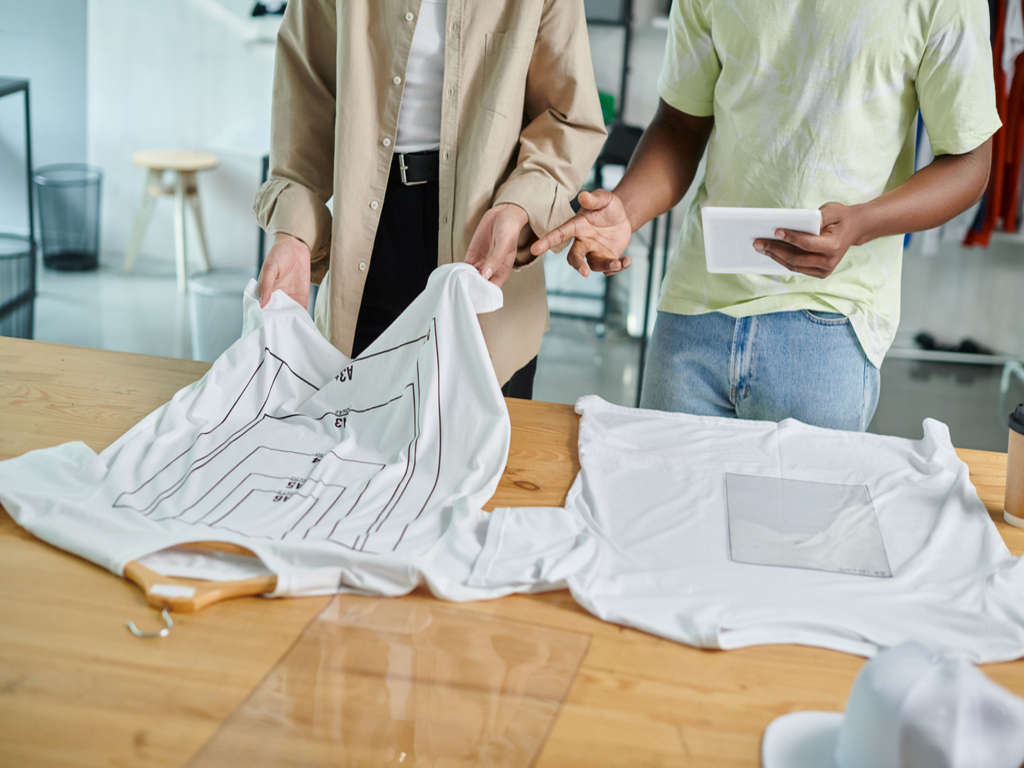
For new custom apparel, Triboro Printing offers professional T-shirt printing services for custom designs and branded apparel.
Conclusion
Removing screen printing from a shirt is not as straightforward as removing an ordinary stain. The result depends on the ink, curing method, fabric, and the garment’s condition.
A worn or peeling design may respond to careful mechanical removal, while purpose-made products can be considered when they match the material. Solvents and heat require particular caution because they can affect the garment as well as the graphic.
If the shirt is valuable or the print will not loosen without damaging the fabric, replacing or covering the design may be a better option. For new custom apparel, Triboro Printing can help with professional T-shirt printing and custom designs.