Can You Sublimate On Acrylic?
Acrylic is popular for signs, awards, displays, ornaments, and decorative products because it is lightweight, durable, and available in a range of finishes. But if you want to add a full-colour design using a heat-transfer process, you first need to answer an important question: can you sublimate on acrylic?
The short answer is yes, but not on every acrylic product. Standard acrylic does not naturally provide the polymer surface required for conventional sublimation. The process works with acrylic blanks specially coated or manufactured for this purpose.
Can You Sublimate on Acrylic?
You can use sublimation on acrylic when the product has a sublimation-compatible coating or surface.
During the transfer process, heat converts the dye into a gas, allowing it to enter a suitable polymer surface. Ordinary untreated acrylic does not behave in the same way as a purpose-made sublimation blank.
This distinction matters because simply placing a sheet of regular acrylic in a heat press does not make it suitable for the process.
If you are unsure whether a particular blank can be used, check the manufacturer’s specifications before applying heat.
What Type of Acrylic Works for Sublimation?
Look for acrylic products specifically labelled for sublimation or supplied with a compatible coating.
These may include:
- Clear or coloured acrylic blanks
- Photo panels
- Awards and plaques
- Keychains and ornaments
- Signs and decorative pieces
- Personalised display products
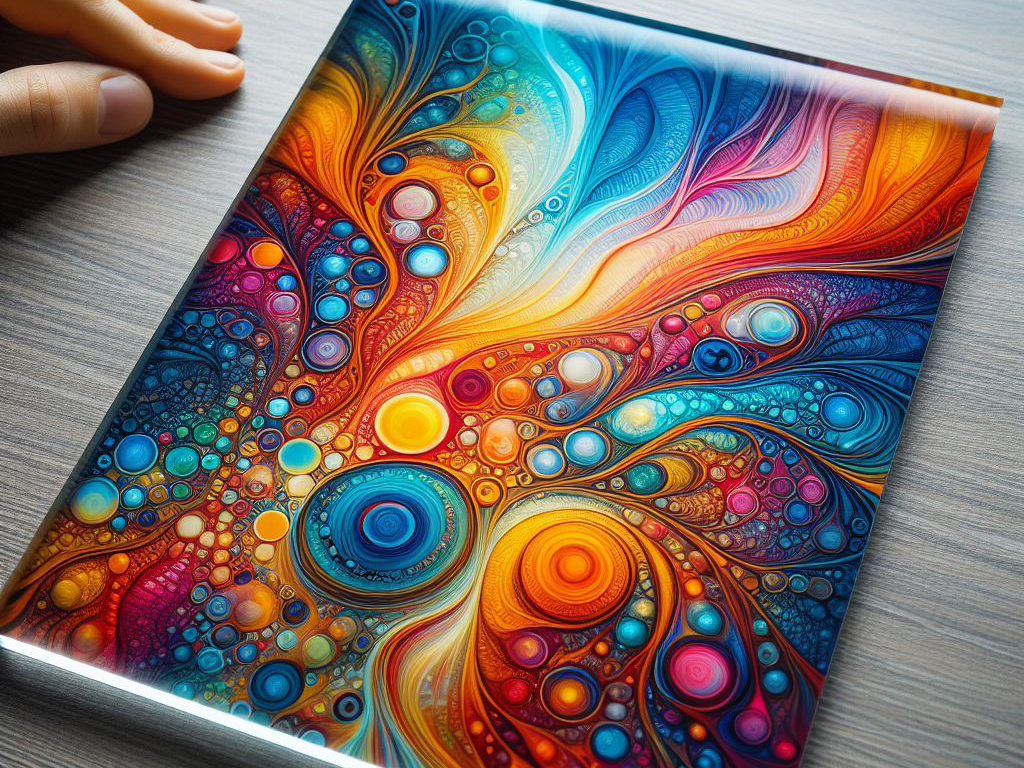
The exact finish and appearance will depend on the product. Some blanks are designed to transfer the image onto a coated surface, while others use a construction that lets you view the graphic through the acrylic.
How Does the Transfer Process Work?
The basic workflow is similar to other sublimation applications, but the blank must be designed for this use.
Prepare the Artwork
Create the design at the appropriate size and resolution. If the final product requires a specific orientation, account for that before producing the transfer.
Print the Design
Print the artwork onto compatible transfer paper using a sublimation printer and suitable dye-based consumables. Follow the equipment manufacturer’s recommendations for colour settings and paper.
Prepare the Blank
Remove any protective film where required and clean the surface according to the blank manufacturer’s instructions. Avoid touching the transfer area unnecessarily.
Position the Transfer
Place the printed design against the correct side of the acrylic blank. Secure it appropriately so the sheet does not move during pressing.
Apply the Recommended Heat
Use the temperature, pressure, and pressing time specified for that particular product. Acrylic products can differ considerably in thickness, coating, and heat tolerance, so no single setting works for every blank.
Allow It to Cool
Follow the supplier’s cooling instructions before handling the finished piece. Avoid moving or bending the product while it is still hot.
What Should You Check Before Sublimating Acrylic?
Choosing the right blank is only part of the process. Check these factors before starting.
Surface Coating
Confirm that the product has a coating or construction intended for sublimation. Don’t assume regular acrylic is compatible.
Heat Tolerance
Acrylic can respond differently to heat depending on its formulation and thickness. Excessive temperature or an unsuitable pressing method may cause distortion or other damage.
Thickness and Shape
Thicker or unusually shaped pieces may require different handling from thin, flat blanks. Follow the supplier’s instructions rather than applying settings from another product.
Protective Film
Some products arrive with protective film on one or both sides. Check the manufacturer’s instructions to see when to remove it.
Test Before Production
If you are using an unfamiliar blank, test a sample first. This lets you check colour, alignment, surface quality, and heat response before producing a larger batch.
What Can You Make With Sublimated Acrylic?
Purpose-made blanks work for a variety of personalised products.
- Awards and plaques: Add names, logos, photographs, or event details.
- Signs: Create branded or decorative displays for businesses, events, and spaces.
- Ornaments: Produce personalised pieces for gifts, celebrations, and seasonal products.
- Photo panels: Use detailed images or artwork for decorative displays.
- Promotional products: Create branded items such as keychains, tags, and other small-format products.
Available options depend on the supplier and the blank’s construction.
What Are the Advantages?
When used with a compatible product, the process can offer several benefits:
- Detailed graphics: Suitable blanks can reproduce photographs, logos, patterns, and other complex artwork.
- Personalisation: Designs can be adapted for individual names, events, businesses, or gifts.
- Distinctive appearance: The combination of a transparent or coloured acrylic surface and transferred artwork can create effects that differ from fabric-based applications.
- Product variety: Specially manufactured blanks are available in different shapes and formats.
What Are the Limitations?
There are also some important considerations.
- Not all acrylic is compatible: Ordinary untreated sheets are not automatically suitable.
- Heat can be a concern: Incorrect settings may damage or distort the product.
- Results vary between blanks: Coatings, thicknesses, finishes, and construction can affect the final appearance.
- Testing may be necessary: If you are working with a new product, a sample run can help establish the appropriate workflow.
Can You Sublimate Directly Onto Regular Acrylic?
Generally, you should not assume that regular acrylic can accept a conventional sublimation transfer.
The process relies on a suitable polymer surface. If the acrylic lacks the necessary coating or construction, the dye will not transfer as it would onto a purpose-made blank.
If you already have regular acrylic sheets, another decoration method may be more appropriate. If you specifically want to use sublimation, choose a product manufactured for that purpose instead.
How Can You Get Better Results?
A few simple checks can make the process more reliable:
- Buy blanks from a supplier that clearly identifies them as sublimation-compatible.
- Follow the manufacturer’s recommended pressing settings.
- Use the recommended transfer paper and printer configuration.
- Make sure the artwork is sized and positioned correctly.
- Keep the transfer sheet from moving during pressing.
- Test one blank before starting a large order.
- Check the finished piece after it cools before starting production.
Avoid copying settings from another acrylic product simply because it looks similar. Different coatings and constructions can respond differently to heat.
Is Acrylic Suitable for Your Project?
Sublimation can be a useful option for acrylic products when the blank has been specifically designed for the process. It can produce personalised awards, signs, ornaments, photo panels, and promotional products with detailed graphics.
However, regular acrylic and sublimation-ready acrylic are not interchangeable. Checking the product specifications before applying heat is one of the most important steps in the workflow.
Conclusion
Yes, you can use acrylic with sublimation, but the material needs a suitable coating or construction. Regular untreated acrylic should not automatically be treated as a compatible substrate.
For the best results, choose a purpose-made blank, follow its recommended heat settings, and test an unfamiliar product before producing a larger order. If you need help with custom signage, displays, or other printed products, Triboro Printing can help you explore the right material and production method for your project.
FAQs
A: Yes, but the clear acrylic product must be specifically designed or coated for sublimation. The final appearance also depends on how the blank is constructed and where you want the image to appear.
A: Regular untreated acrylic should not be assumed to be compatible with conventional sublimation. Purpose-made sublimation blanks are a safer choice because their surface is designed to accept the transfer.