
5 Creative Ways NYC Businesses Are Using Large-Format Prints & Signage to Cut Through the Noise
New York City businesses compete for attention everywhere people look. Storefronts, restaurants, offices, construction sites, event spaces, and vehicles all provide opportunities to communicate a brand visually.
Large-format printing lets you turn these spaces into branded touchpoints with banners, window graphics, wall displays, vehicle graphics, posters, and other oversized applications.
The key is not simply making something bigger. Effective large-format signage combines the right location, message, design, and material for the environment.
Here are five practical ways NYC businesses can use large-format print to increase visibility.
1. Transform Construction Scaffolding Into Branded Space
Construction sites are a familiar part of the NYC streetscape, and the structures surrounding a project can provide substantial visual space.
Large-format graphics and mesh banners can be used on suitable construction structures to display project information, branding, architectural visuals, or promotional messaging, subject to applicable approvals and site requirements.
Mesh materials can allow some airflow through the graphic, which can be useful for certain outdoor installations. The appropriate material and installation method depend on the structure, location, exposure, and project requirements.
For construction companies, developers, and property owners, a well-designed graphic can make a temporary structure look more intentional while communicating information to people passing the site.
2. Turn Storefront Windows Into Large-Scale Displays
A storefront window can do more than serve as a transparent barrier between the street and the interior. Window graphics can introduce a new campaign, promote a seasonal offer, communicate opening information, or reinforce a brand’s visual identity.
Depending on the design and application, businesses can use:
- Printed window graphics
- Perforated window film
- Frosted effects
- Promotional decals
- Full-window imagery
- Temporary campaign graphics
The design should be considered from the pedestrian’s viewing distance. Large text, strong visual hierarchy, and a clear message are generally more useful than filling every available section of glass.
For temporary campaigns, removable materials can also make it easier to update the display later.
3. Use Large Posters and Banners to Create Attention at Events
Businesses do not need a building-sized installation to make an impact. Large posters and banners can provide strong visibility at:
- Trade shows
- Product launches
- Corporate events
- Grand openings
- Community events
- Conferences
- Retail promotions
- Restaurant openings
The best format depends on where you’ll display the graphic. A hanging banner may work for an event venue, while a mounted poster may suit an indoor wall or display area better.
Outdoor applications require additional consideration of wind, moisture, sunlight, mounting, and finishing.
4. Turn Company Vehicles Into Mobile Brand Displays
A company vehicle travels through multiple neighbourhoods during a normal working day, making it another potential branding surface.
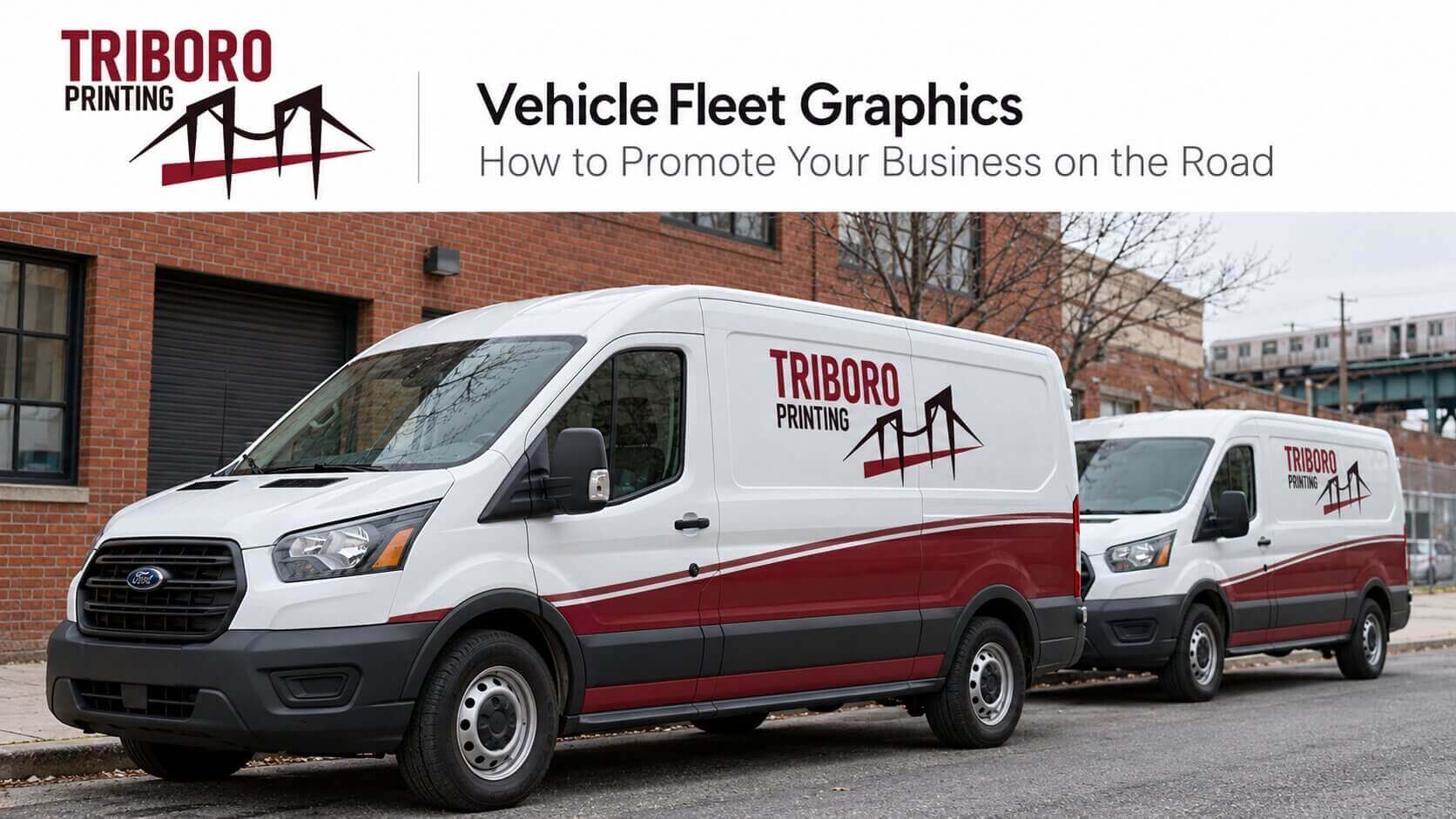
Vehicle graphics can range from simple lettering to larger custom graphics covering substantial sections of a van, truck, or fleet vehicle.
A useful design usually prioritizes information that can be understood quickly, such as:
- Company name
- Logo
- Website
- Phone number
- Main service
- Short message
The application surface also matters. Vehicle graphics need to account for curves, handles, doors, windows, body seams, and other physical features.
For businesses operating multiple vehicles, using a consistent graphic system can help create a recognizable fleet appearance.
5. Create Branded Wall and Interior Graphics
Large-format printing is not limited to outdoor advertising. Interior walls can become useful branding and communication spaces in restaurants, offices, retail stores, hotels, gyms, and event venues.
Businesses can use large graphics for:
- Brand imagery
- Murals
- Wayfinding
- Decorative displays
- Product information
- Photo backdrops
- Reception areas
- Restaurant interiors
A wall graphic can also help make a space feel more consistent with the brand without requiring permanent architectural changes.
Before production, consider the wall surface, dimensions, lighting, expected viewing distance, and whether the installation is temporary or long-term.
What Should You Consider Before Ordering Large-Format Graphics?
Large-format projects require more planning than simply enlarging a design.
Where Will the Graphic Be Installed?
Indoor and outdoor environments have different requirements. Outdoor projects may need materials and finishes that can handle weather exposure, while an interior graphic may place greater emphasis on appearance and removability.
How Will People View It?
A graphic viewed from a passing vehicle needs a different approach from one people will read while standing a few feet away.
Keep important information large enough to read at the expected viewing distance.
What Material Should You Use?
The right substrate depends on the application. Options can include:
- Vinyl
- Mesh
- Fabric
- Poster paper
- Adhesive films
- Rigid boards
There is no single material that works for every large-format project.
How Will It Be Installed?
Installation can affect the design, dimensions, finishing, and material selection.
For example, a wall graphic, vehicle graphic, hanging banner, and rigid sign all require different installation approaches.
Are Permits or Approvals Required?
This is particularly important in NYC.
Businesses should not assume they can install any large-format advertising on public property or attach it to city infrastructure. NYC DOT’s street-banner program has specific eligibility, permit, size, installation, and content requirements. Its current rules state that permitted streetlight banners are generally for public, cultural, or historical events, and commercial advertising is prohibited.
Businesses also need to consider applicable building, zoning, sidewalk, and construction requirements for other installations. NYC rules vary by location and signage type.
How Can NYC Businesses Get More From Large-Format Printing?
The strongest large-format projects usually start with the location rather than the printing method.
Ask:
- Who will see this?
- How much time will they have to read it?
- What is the one message they should remember?
- How far away will they be?
- How long will the graphic remain installed?
- Will it be indoors or outdoors?
- What environmental conditions will it face?
- How will it be installed and removed?
Answering these questions first makes it easier to choose the right size, material, finish, and design.
Choosing the Right Large-Format Solution
| Application | Common Options | Key Considerations |
|---|---|---|
| Construction site | Mesh banners, solid banners, rigid signage | Wind, weather, installation, visibility |
| Storefront | Window graphics, decals, posters | Glass surface, viewing distance, removability |
| Events | Banners, backdrops, posters, displays | Venue, mounting, transport |
| Vehicles | Lettering, decals, full graphics | Vehicle shape, surface condition, installation |
| Interior spaces | Wall graphics, murals, mounted prints | Wall surface, lighting, duration |
The right option depends on the project, not just the size of the graphic.
Work With a Local NYC Printing Partner
Large-format projects often involve more than printing a file. Material selection, artwork preparation, finishing, dimensions, delivery, and installation can all affect the final result.
Working with a local provider can also make communication easier when a project requires physical samples, site-specific requirements, or installation coordination.
Triboro Printing is based in Astoria, Queens, and provides commercial printing and signage services for NYC businesses, including banners, posters, construction signage, vehicle graphics, and other large-format applications.
Conclusion
Large-format printing gives NYC businesses plenty of ways to make better use of the physical spaces around them. Construction graphics can make project sites more informative, window displays can refresh a storefront, banners can support events, vehicle graphics can extend branding beyond a single location, and wall displays can transform interior spaces.
The best approach depends on the audience, location, viewing distance, material, installation method, and campaign duration. Instead of simply making a graphic larger, focus on making it appropriate for the space where people will actually see it.
If you’re planning a large-format project in New York City, Triboro Printing can help you explore suitable printing, material, and finishing options for your application.
FAQs
It depends on the type, location, and installation. NYC has specific requirements for signage and street banners, and some installations require permits or approvals. Check the applicable NYC agency requirements before installing graphics on public property or city infrastructure.